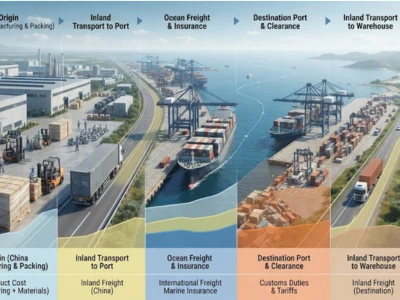
As of July 2026, global industrial procurement has entered a period of elevated geopolitical uncertainty. Escalating tensions across the Middle East have transformed what was once considered a regional logistics challenge into a strategic supply chain risk affecting manufacturers, procurement agencies, EPC contractors, distributors, and industrial exporters worldwide. For companies sourcing or delivering machinery, electrical equipment, valves, chemicals, instrumentation, steel products, and industrial components, transportation decisions can no longer be made independently from procurement strategy.
Unlike temporary freight disruptions caused by weather or seasonal congestion, geopolitical conflicts create systemic risks that simultaneously affect carrier operations, insurance coverage, customs clearance, inventory planning, contractual obligations, and project execution. Procurement managers are therefore expected to evaluate logistics decisions from a Total Landed Cost (TLC) and Business Continuity perspective rather than simply comparing freight quotations.

The Strait of Hormuz remains one of the world's most strategically important maritime chokepoints, supporting a substantial share of global energy exports and serving as a critical gateway for industrial cargo moving into the Persian Gulf. When security conditions deteriorate, shipping companies, insurers, ports, customs authorities, suppliers, and buyers all adjust their operational policies simultaneously, creating cascading disruptions throughout the supply chain.
For industrial buyers, the objective is no longer finding the lowest freight rate. The real objective is protecting production continuity while minimizing total business exposure.
This report provides practical procurement guidance based on current shipping conditions, procurement risk management principles, and industrial sourcing practices. Rather than focusing solely on logistics, it explains how procurement organizations can reduce commercial exposure by optimizing routing strategies, supplier planning, insurance structures, inventory policies, and contractual risk allocation.
Procurement Perspective: Logistics Is Only One Part of Procurement Risk
Many organizations still treat freight as the final step after purchasing decisions have been completed. In reality, experienced procurement teams recognize that transportation is only one component of a much broader supply chain system.
During geopolitical disruptions, every logistics decision influences multiple business functions, including:
- Supplier performance
- Production scheduling
- Working capital utilization
- Inventory availability
- Contract compliance
- Customer delivery commitments
- Overall Total Landed Cost (TLC)
For example, selecting the cheapest shipping route may reduce freight expenditure but significantly increase production interruption risks if vessels become delayed or ports suspend operations. Conversely, paying a higher freight rate for an alternative routing may reduce overall business costs by preventing project delays, contractual penalties, and emergency production shutdowns.
Instead of asking:
- "Which shipping option is the cheapest?"
- Professional procurement organizations ask:
- "Which option creates the lowest total business risk while maintaining acceptable commercial performance?"
- This shift from freight optimization to risk optimization is the foundation of modern industrial procurement.
1. Key Middle East Logistics Challenges Caused by Regional Conflict
The current Middle East crisis extends far beyond ordinary shipping delays. It has fundamentally altered operational conditions throughout the Persian Gulf logistics network, introducing uncertainty into carrier scheduling, insurance underwriting, customs processing, and commercial contracting.
Heavy industrial machinery, electrical equipment, process systems, chemical products, precision instruments, and project cargo are all experiencing elevated transportation risks due to increased operational restrictions across strategic maritime corridors.
Matrix 1. Cross-Border Shipping Lead Times & Route Pressures (July 2026)
| Shipping Route | Current Situation | Procurement Impact |
|---|---|---|
| Cape of Good Hope Diversion | +15–20 days | Longer production planning cycles and higher inventory costs |
| Inner Persian Gulf Ports | Booking restrictions and service suspensions | Significant delivery uncertainty |
| Middle East Air Freight | Limited capacity with spot pricing | Suitable only for mission-critical cargo |
| Fujairah, Khor Fakkan & Jeddah | Stable operating gateways with continuing carrier services | Preferred alternative routing strategy |
Rather than viewing these issues independently, procurement managers should evaluate how each disruption affects downstream manufacturing, customer commitments, cash flow, and supplier performance.
1.1 Blocked Strategic Shipping Corridors Increase Supply Chain Uncertainty
The Strait of Hormuz remains one of the world's most strategically significant maritime corridors, connecting Gulf producers and industrial markets with global shipping networks. A substantial volume of energy products, industrial raw materials, machinery, valves, chemicals, and manufacturing equipment passes through this corridor every year.
Escalating military tensions have substantially increased operational uncertainty throughout the region. Shipping schedules have become less predictable, insurance costs have risen, and many buyers are extending procurement lead times to compensate for possible transportation disruptions.
For procurement organizations, the principal challenge is not simply delayed vessels-it is the growing unpredictability of delivery schedules. Production planning becomes increasingly difficult when estimated arrival dates can no longer be relied upon with confidence.
This uncertainty often results in:
- Manufacturing interruptions
- Project commissioning delays
- Inventory shortages
- Working capital occupation
- Customer delivery disputes
From a procurement perspective, uncertainty frequently creates greater financial exposure than transportation costs themselves.
1.2 Major Carriers Activate Force Majeure Measures
Top international carriers have implemented emergency operational measures across affected Gulf shipping routes. Service adjustments, booking restrictions, route modifications, and force majeure provisions have become increasingly common for cargo destined for high-risk areas.
For procurement planning purposes, organizations should assume that all mainstream carriers have activated force majeure provisions or equivalent emergency operational measures for affected Gulf services.
This assumption has significant commercial implications.
Additional costs generated by geopolitical disruptions-including detention charges, demurrage, emergency route diversions, storage expenses, and operational surcharges-may ultimately be transferred through the logistics chain to cargo owners, depending on contractual terms and carrier conditions.
Consequently, procurement managers should no longer regard freight quotations as fixed costs. Logistics budgets must include contingency allowances capable of absorbing unexpected operational expenses throughout the transportation process.
1.3 Route Diversions Increase Total Landed Cost
When security risks escalate, shipping routes frequently require operational adjustments. Alternative routings inevitably extend transportation cycles while increasing overall logistics expenditure.
Although freight rates remain an important procurement consideration, experienced sourcing organizations understand that freight represents only one component of Total Landed Cost.
Additional business costs may include:
- Extended inventory holding periods
- Increased warehouse utilization
- Production idle time
- Project schedule delays
- Cash flow occupation
- Customer compensation exposure
- Emergency procurement requirements
Procurement teams should therefore avoid selecting transportation solely based on the lowest freight quotation.
Instead, each routing option should be evaluated using a Trade-off Analysis balancing:
- Transportation cost
- Delivery reliability
- Production continuity
- Inventory requirements
- Commercial obligations
- Overall business risk
The objective is not minimizing freight expenditure, but minimizing total procurement risk.
1.4 War Risk Insurance Becomes a Strategic Procurement Tool
As geopolitical risks continue to increase, insurance should no longer be viewed as a finance department responsibility alone. It has become an essential component of procurement risk management.
Standard marine cargo insurance typically excludes many losses arising from war, military conflict, political violence, or government intervention. As a result, companies relying solely on basic cargo insurance may face significant uninsured exposure if shipments become stranded or disrupted by geopolitical events.
For shipments into higher-risk Middle East destinations, procurement organizations should integrate dedicated:
War Risk Insurance
Strike Insurance
Political Risk Insurance
Supply Chain Interruption Insurance (for high-value projects)
When the applicable policy expressly covers the relevant event and all policy conditions are satisfied, war risk insurance provides the contractual mechanism necessary to recover insured financial losses arising from covered geopolitical events.
For high-value industrial equipment, automation systems, precision instruments, and critical production assets, specialized insurance should therefore be regarded as part of the procurement strategy rather than an optional logistics expense.
More importantly, procurement departments should preserve complete documentation throughout the shipping process-including booking confirmations, carrier notices, route changes, and official operational advisories-to support future insurance claims, customer communication, and contractual negotiations if disruptions occur.
2. Risk Realities Across Industrial Product Segments
Not all industrial products are affected equally by geopolitical disruptions. The level of exposure depends on cargo value, transportation mode, inventory turnover, production dependency, regulatory requirements, and customer delivery commitments.
A procurement organization that applies identical logistics strategies to every product category will inevitably increase supply chain risk.
Instead, procurement managers should classify products according to their business criticality and operational characteristics before selecting transportation, insurance, inventory, and supplier strategies.
Table 1. Industrial Product Risk Assessment & Procurement Directives
| Product Category | Primary Risks | Recommended Procurement Strategy |
|---|---|---|
| Heavy Machinery & Structural Steel | High freight sensitivity, extended lead times, project delays | Use peripheral ports, split deliveries, increase project scheduling buffer |
| Valves, Pipes & Process Equipment | Port congestion, delayed commissioning, contractual penalties | Route through Jeddah or Fujairah, then distribute via inland logistics |
| Industrial Chemicals | Customs delays, hazardous cargo restrictions, storage charges | Avoid inner Gulf ports, prioritize alternative gateways and regional warehousing |
| Precision Instruments & Automation | High capital exposure, production interruption | Air freight for critical items, comprehensive war risk insurance |
| Electrical Components & Control Systems | Production shutdown caused by component shortages | Dual sourcing, safety stock, phased deliveries |
This risk-based classification allows procurement teams to allocate resources where they generate the greatest reduction in overall business exposure rather than simply lowering freight costs.
2.1 Heavy Machinery & Structural Materials: Freight Cost Is Only the Beginning
Large machinery, fabricated steel structures, castings, pressure vessels, and bulk hardware are traditionally transported by sea due to their size and weight.
Although these products generally have relatively low value density, they often support high-value industrial projects. A delayed shipment may postpone the installation of an entire production line, causing losses that far exceed the additional freight expense.
Procurement teams should therefore avoid evaluating heavy cargo solely on ocean freight quotations.
Instead, they should consider:
- Equipment installation schedules
- EPC project milestones
- Crane availability
- Site readiness
- Customer acceptance dates
- Working capital occupation
Whenever practical, project cargo should be divided into multiple shipment batches so that critical installation components arrive first while lower-priority items follow under more flexible schedules.
This approach improves construction continuity while reducing dependence on a single shipment.
2.2 Valves, Pipelines & Industrial Chemicals Require Specialized Routing
Among all industrial products, valves, piping systems, process equipment, and industrial chemicals are particularly vulnerable to regional disruptions.
Many of these products support continuous production processes in refineries, chemical plants, power stations, and water treatment facilities. Delivery delays can postpone plant commissioning, interrupt maintenance shutdowns, or delay expansion projects.
Furthermore, hazardous cargo frequently encounters additional inspection requirements and longer customs processing times during periods of geopolitical uncertainty.
Procurement Recommendation
For process-industry cargo, all valve systems, industrial chemicals, and related process equipment should be routed through Jeddah or Fujairah whenever operationally feasible, followed by inland transportation to the final destination.
This routing strategy provides several advantages:
- Reduced exposure to high-risk maritime corridors
- Better carrier service availability
- Lower probability of prolonged vessel detention
- More predictable customs processing
- Greater flexibility for regional redistribution
Although inland transportation may increase logistics expenditure, it frequently lowers overall project risk by improving delivery reliability.
From a procurement perspective, predictable delivery is often more valuable than lower transportation cost.
2.3 Precision Equipment Carries the Highest Capital Risk
Automation systems, PLCs, analyzers, laboratory instruments, sensors, semiconductor components, and high-precision electrical equipment represent relatively small shipment volumes but extremely high commercial value.
Unlike structural steel or general hardware, these products often become single points of failure within manufacturing systems.
A single missing controller or transmitter may delay the commissioning of an entire production facility.
Procurement organizations should therefore classify these items as business-critical components rather than ordinary cargo.
Recommended strategies include:
- Priority air freight for urgent components
- Split shipments to reduce concentration risk
- Comprehensive war risk insurance
- Regional emergency inventory
- Multiple qualified suppliers
For these products, minimizing delivery uncertainty is generally more important than minimizing logistics costs.
2.4 Supplier Risk Often Exceeds Transportation Risk
One of the most common procurement mistakes during geopolitical disruptions is concentrating exclusively on transportation while ignoring supplier resilience.
Even if logistics routes remain available, production may still fail when suppliers experience:
- Raw material shortages
- Export restrictions
- Financial pressure
- Labor disruptions
- Production capacity constraints
Transportation risk and supplier risk should therefore be evaluated together.
Professional procurement organizations continuously assess supplier resilience using indicators such as:
- Manufacturing capacity
- Financial stability
- Geographic diversification
- Export experience
- Emergency response capability
- Inventory management practices
Rather than depending on a single supplier or a single shipping corridor, buyers should develop qualified secondary suppliers capable of supporting emergency production when necessary.
Supplier diversification does not eliminate geopolitical risk, but it significantly reduces operational dependence on any single point of failure.
Procurement Insight: Concentration Creates Hidden Supply Chain Risk
Many organizations believe they have diversified risk because they purchase from several suppliers.
However, those suppliers may:
- Use the same shipping line
- Ship through the same port
- Source identical raw materials
- Manufacture within the same industrial zone
In such situations, apparent supplier diversification provides little practical resilience.
True procurement resilience requires diversification across multiple dimensions:
- Suppliers
- Transportation routes
- Logistics providers
- Geographic regions
- Inventory locations
Only by reducing concentration across the entire supply chain can procurement organizations meaningfully improve business continuity.
Trade-off Analysis: Procurement Decisions Should Optimize Risk, Not Freight
Every procurement decision involves trade-offs.
Selecting the lowest-cost shipping option may reduce immediate logistics expenditure but increase the probability of production interruptions, contractual disputes, and customer dissatisfaction.
Conversely, paying more for a reliable routing may reduce the organization's overall financial exposure.
Procurement managers should therefore evaluate every logistics decision against multiple business objectives.
| Decision Factor | Lowest Freight Option | Lowest Business Risk Option |
|---|---|---|
| Ocean Freight | ✓ Lowest | Higher |
| Delivery Reliability | Lower | Higher |
| Production Continuity | Higher risk | Better protected |
| Inventory Stability | Less predictable | More stable |
| Customer Commitments | Greater exposure | Better compliance |
| Total Landed Cost | Potentially higher after disruptions | Usually more controllable |
The objective is not to minimize transportation cost.
The objective is to minimize Total Landed Business Risk.
Failure Mode Analysis: How Small Logistics Problems Become Major Commercial Losses
Industrial procurement failures rarely result from a single event.
Instead, losses usually develop through a chain reaction.
A typical escalation may follow this sequence:
- Regional conflict disrupts shipping schedules.
- Carrier adjusts or suspends services.
- Critical components arrive later than planned.
- Manufacturing schedules slip.
- Customer acceptance is postponed.
- Working capital remains tied up.
- Contractual disputes emerge.
- Project profitability declines.
Breaking any one of these links can significantly reduce downstream losses.
This is why experienced procurement organizations invest in preventive measures such as alternative routing, supplier diversification, inventory buffers, insurance upgrades, and contract optimization rather than relying solely on emergency response after disruptions occur.
3. Practical Risk Avoidance Solutions for Industrial Procurement
Industrial procurement teams cannot eliminate geopolitical uncertainty, but they can significantly reduce its impact through structured planning and proactive decision-making.
The most resilient organizations do not wait for shipping disruptions to occur before responding. Instead, they establish contingency strategies that integrate transportation planning, supplier management, inventory policies, insurance coverage, and commercial contracts into a unified Business Continuity framework.
Rather than reacting to individual logistics incidents, procurement managers should build supply chains capable of continuing operations under changing geopolitical conditions.
3.1 Optimize Shipping Routes Before Problems Occur
One of the most effective methods of reducing logistics risk is avoiding unnecessary exposure to high-risk shipping corridors.
Procurement organizations should review shipment destinations before cargo leaves the factory rather than attempting emergency diversions after vessels are already in transit.
Table 2. Recommended Routing Strategy
| Procurement Objective | Operational Action | Expected Business Benefit |
|---|---|---|
| Reduce geopolitical exposure | Prioritize peripheral ports | Lower transportation uncertainty |
| Improve delivery predictability | Diversify logistics routes | Better production planning |
| Protect project schedules | Increase transportation flexibility | Fewer commissioning delays |
| Improve supply chain resilience | Avoid excessive dependence on a single corridor | Stronger business continuity |
For most industrial cargo, Fujairah, Khor Fakkan, and Jeddah should remain the preferred alternative gateways whenever operationally feasible. These ports continue to provide more stable carrier services and reduce dependence on the highest-risk sections of the Persian Gulf shipping network.
Routing cargo through alternative gateways may increase inland transportation costs, but procurement teams should evaluate this additional expenditure against the much larger financial consequences of delayed production, contractual disputes, and project interruption.
The procurement objective is not the shortest transportation route-it is the most reliable commercial outcome.
3.2 Prioritize Shipments According to Business Criticality
Not every shipment deserves the same transportation priority.
One of the most common procurement failures during geopolitical disruptions is treating every purchase order as equally urgent.
Professional procurement organizations classify shipments according to business impact.
Critical Priority
Examples include:
- PLC systems
- Automation controls
- Safety equipment
- Critical spare parts
- Production-startup components
Recommended strategy:
- Air freight where justified
- Split shipments
- Enhanced insurance
- Executive shipment monitoring
Medium Priority
Examples include:
- Standard valves
- Pipe fittings
- Production materials
- Mechanical assemblies
- Recommended strategy:
- Alternative port routing
- Flexible delivery schedules
- Inventory coordination
Low Priority
Examples include:
- General hardware
- Bulk steel
- Consumables
- Non-critical accessories
- Recommended strategy:
- Consolidated shipments
- Deferred purchasing where appropriate
- Cost optimization
This classification allows procurement departments to concentrate resources where delays create the greatest commercial consequences.
3.3 Immediate Procurement Actions for High-Risk Destinations
During periods of elevated geopolitical uncertainty, procurement managers should distinguish between ordinary operational delays and destinations where the overall business risk becomes unacceptable.
Procurement Recommendation
Immediately suspend all urgent shipments destined for Iran, Iraq, Bahrain, Qatar, and Kuwait until operational conditions become sufficiently stable to support predictable transportation and customs clearance.
This recommendation applies particularly to:
- Emergency project deliveries
- High-value equipment
- Production-critical components
- Time-sensitive replacement parts
Where contractual obligations require continued supply, procurement organizations should first conduct a comprehensive risk assessment covering:
- Carrier service availability
- Insurance coverage
- Port operating status
- Customs processing
- Customer receiving capability
- Alternative logistics options
Urgent shipments should proceed only after these factors have been fully evaluated and approved by the appropriate commercial decision-makers.
3.4 Standardize Routing for Valves, Chemicals and Process Equipment
Process industries generally operate with tighter maintenance schedules and stricter commissioning deadlines than many other manufacturing sectors.
Unexpected logistics interruptions can delay refinery shutdowns, chemical plant upgrades, water treatment projects, and energy infrastructure construction.
Accordingly, procurement teams should adopt standardized routing policies instead of evaluating each shipment independently.
Recommended Procurement Policy
Route all industrial valves, pipeline systems, process equipment, and chemical cargo through Jeddah or Fujairah whenever practical, followed by inland distribution to the final destination.
The advantages include:
- Reduced geopolitical exposure
- Better schedule predictability
- Lower probability of prolonged vessel detention
- Greater carrier flexibility
- Improved coordination with regional distributors
Although this approach may increase inland transportation costs, it often reduces total project risk and improves overall delivery reliability.
Consistency is frequently more valuable than marginal freight savings.
3.5 Build Business Continuity Into Procurement Decisions
Business Continuity Planning should not begin after supply chain disruptions occur.
It should be incorporated into procurement strategy before purchase orders are issued.
Key elements include:
Safety Stock
Maintain inventory buffers for components that cannot easily be replaced.
Inventory decisions should be based on business impact rather than historical consumption alone.
Regional Warehousing
Where commercially justified, position strategic inventory closer to end users through regional distribution centers.
This reduces dependence on emergency international shipments.
Dual Sourcing
Avoid excessive dependence on a single qualified supplier.
Whenever practical, maintain at least one approved secondary supplier capable of supporting production during emergencies.
Framework Agreements
Establish long-term agreements with logistics providers and strategic suppliers before disruptions occur.
Pre-negotiated commercial arrangements often provide greater flexibility than emergency procurement during crises.
Business continuity is not created by responding quickly.
It is created by preparing early.
3.6 Procurement Decision Framework
Geopolitical uncertainty requires structured decision-making rather than ad hoc reactions.
The following framework provides a practical sequence for evaluating industrial shipments.
Step 1
Is the shipment business-critical?
Yes → Continue to Step 2.
No → Consider postponement or consolidation.
Step 2
Can alternative gateways be used?
Yes → Prioritize Fujairah, Khor Fakkan, or Jeddah.
No → Conduct executive-level risk review before shipment.
Step 3
Does the shipment require specialized insurance?
High-value equipment
Automation systems
Precision instruments
EPC project cargo
If yes, integrate comprehensive war risk and political risk coverage before dispatch.
Step 4
Can inventory or secondary suppliers reduce urgency?
If alternative supply exists, postpone transportation until operational conditions improve.
If not, implement enhanced monitoring and contingency planning.
Step 5
Review commercial contracts.
Confirm:
- Delivery obligations
- Force majeure provisions
- Insurance responsibilities
- Cost-sharing mechanisms
- Customer communication procedures
Only after completing these steps should procurement approve shipment execution.
3.7 Integrate Insurance and Commercial Contracts
Transportation decisions cannot be separated from contractual risk.
During geopolitical disruptions, insurance and commercial agreements become critical procurement tools.
Procurement managers should ensure every significant Middle East project clearly defines:
- Force majeure events
- Carrier operational changes
- Route diversions
- Insurance responsibilities
- Cost allocation
- Delivery extensions
Where appropriate, procurement contracts should expressly allow:
- Free order adjustment
- Delivery schedule extensions
- Zero liquidated damages for qualifying force majeure events
- Transparent allocation of extraordinary logistics costs
Clear contractual language reduces commercial disputes while protecting long-term customer relationships.
Successful procurement is not measured by avoiding every disruption.
It is measured by ensuring that disruptions remain commercially manageable.
Procurement Insight: Resilience Outperforms Cost Optimization
Traditional procurement focused primarily on reducing purchase prices and freight costs.
Modern industrial procurement focuses on maintaining operational continuity.
Organizations that consistently outperform competitors during geopolitical crises usually share several characteristics:
- Diversified supplier networks
- Multiple logistics options
- Structured inventory policies
- Comprehensive insurance planning
- Clearly defined contractual protections
- Cross-functional coordination between procurement, logistics, legal, finance, and operations
These organizations understand that resilience is not an additional cost.
It is a long-term competitive advantage.
4. Middle East Port Status Reference
Port selection has become a strategic procurement decision rather than a purely logistics function. During periods of geopolitical uncertainty, procurement managers should continuously evaluate carrier availability, customs efficiency, inland transportation, insurance requirements, and overall business continuity before confirming shipment routes.
The following overview reflects current operational conditions and should be incorporated into shipment planning alongside the latest carrier and customer updates.
| Port | Current Status | Procurement Recommendation |
|---|---|---|
| Jeddah (Saudi Arabia) | Stable operations with broad carrier coverage | Preferred regional gateway for industrial cargo |
| Fujairah (UAE) | Stable operations outside the inner Gulf | Recommended alternative routing for project cargo |
| Khor Fakkan (UAE) | Stable transshipment hub with reliable schedules | Suitable for regional redistribution |
| Dubai (Jebel Ali) | Operational but subject to changing regional conditions | Monitor carrier advisories before shipment |
| Inner Persian Gulf Ports | Higher operational uncertainty | Conduct project-specific risk assessment before booking |
Procurement teams should remember that port availability alone does not guarantee supply chain stability. Carrier schedules, inland transportation capacity, customer receiving capability, customs processing, and insurance conditions should all be reviewed before shipment approval.
Contract Risk Control Checklist
Commercial contracts should evolve together with geopolitical conditions.
Many procurement disputes arise not because cargo cannot be delivered, but because contracts fail to define responsibilities when transportation conditions change unexpectedly.
Before shipping high-value industrial equipment into the Middle East, procurement organizations should verify that contracts clearly address the following:
✓ Force majeure definitions
✓ Delivery schedule adjustment procedures
✓ Alternative routing approval mechanisms
✓ War risk insurance responsibilities
✓ Extraordinary logistics cost allocation
✓ Customer notification requirements
✓ Acceptance procedures following transportation delays
Where commercially appropriate, procurement agreements should explicitly permit:
- Free order adjustment
- Delivery schedule extensions
- Zero liquidated damages for qualified force majeure events
Well-designed contracts reduce commercial uncertainty while preserving long-term customer relationships during periods of instability.
FAQ
Should procurement decisions be delayed because of the Middle East situation?
Not necessarily.
Routine procurement activities can continue provided that organizations reassess transportation routes, supplier capability, insurance coverage, inventory levels, and contractual obligations before shipment. The objective is controlled risk management rather than unnecessary suspension of business.
Which Middle East ports currently offer the most stable logistics environment?
Based on current operating conditions, Fujairah, Khor Fakkan, and Jeddah remain the most stable gateway options for many categories of industrial cargo. Procurement teams should still verify the latest carrier schedules and customer receiving capabilities before finalizing transportation plans.
Should all shipments purchase war risk insurance?
Not always.
War risk insurance is generally recommended for:
- High-value machinery
- Automation systems
- Industrial instrumentation
- EPC project equipment
- Time-critical production assets
Insurance requirements should be determined through a shipment-specific risk assessment rather than applying a single rule to every order.
Is the lowest freight quotation still the best procurement choice?
In many situations, no.
The lowest freight rate may result in higher overall business costs if delivery uncertainty leads to production delays, contractual disputes, inventory shortages, or customer dissatisfaction.
Professional procurement organizations evaluate transportation using Total Landed Cost together with overall business risk rather than freight price alone.
What is the most effective long-term strategy for reducing geopolitical supply chain risk?
The strongest organizations combine several complementary measures instead of relying on a single solution.
These typically include:
- Diversified suppliers
- Alternative logistics routes
- Regional inventory buffers
- Comprehensive insurance
- Flexible commercial contracts
- Continuous supply chain monitoring
Together, these measures improve resilience while reducing dependence on any single supplier, carrier, or transportation corridor.
Conclusion
The current Middle East logistics environment demonstrates that procurement risk extends far beyond transportation.
Geopolitical events influence supplier performance, carrier operations, inventory planning, insurance coverage, project execution, and contractual obligations simultaneously. Organizations that continue to evaluate logistics purely through freight costs may underestimate their true commercial exposure.
Industrial procurement should therefore transition from reactive logistics management to proactive risk governance.
By combining alternative routing strategies, supplier diversification, inventory planning, insurance protection, and well-structured commercial contracts, procurement organizations can substantially improve business continuity while maintaining stable customer delivery performance.
In uncertain markets, resilience is rarely achieved through a single operational decision.
It is built through consistent procurement discipline across the entire supply chain.
Final Recommendations
For procurement organizations shipping industrial products into the Middle East, the following actions should be prioritized:
Treat logistics as an integral part of procurement risk management rather than a standalone transportation activity.
Prioritize Fujairah, Khor Fakkan, and Jeddah as alternative gateways whenever operationally feasible.
Immediately suspend all urgent cargo bound for Iran, Iraq, Bahrain, Qatar, and Kuwait until transportation conditions can support predictable delivery and customs clearance.
Route valve products, industrial chemicals, and related process equipment through Jeddah or Fujairah whenever practical.
Integrate war risk insurance into procurement planning for high-value and business-critical shipments.
Build supply chain resilience through dual sourcing, strategic inventory buffers, and regional warehousing.
Review commercial contracts to ensure they support free order adjustment, delivery schedule extensions, and zero liquidated damages where force majeure provisions apply.
Evaluate every logistics decision based on Total Landed Cost, delivery reliability, and business continuity, rather than freight price alone.
Industrial procurement is no longer defined by securing the lowest purchase cost.
Its success is measured by the ability to maintain safe, predictable, and commercially sustainable supply chains-even under the most challenging geopolitical conditions.