Accurately measuring the heat output of industrial heaters is crucial for ensuring optimal performance, energy efficiency, and safety in various industrial applications. As a leading supplier of industrial heaters, we understand the significance of precise heat output measurement and its impact on the overall efficiency of industrial processes. In this blog post, we will explore the key methods and considerations for accurately measuring the heat output of industrial heaters.
Understanding Heat Output
Before delving into the measurement techniques, it is essential to understand what heat output means in the context of industrial heaters. Heat output, also known as heating capacity, refers to the amount of heat energy a heater can generate and transfer to its surroundings within a specific period. It is typically measured in watts (W) or British thermal units per hour (BTU/h). The heat output of an industrial heater depends on several factors, including the heater's design, power rating, and the medium it is heating.
Importance of Accurate Heat Output Measurement
Accurate heat output measurement is vital for several reasons. Firstly, it helps in determining the appropriate heater size for a particular application. An undersized heater may not provide sufficient heat, leading to inefficient operation and longer heating times. On the other hand, an oversized heater can waste energy and increase operating costs. Secondly, precise heat output measurement ensures that the heater operates within its designed parameters, reducing the risk of overheating and potential damage to the equipment. Finally, it allows for better control and optimization of industrial processes, leading to improved product quality and productivity.
Methods for Measuring Heat Output
There are several methods available for measuring the heat output of industrial heaters. The choice of method depends on the type of heater, the application, and the level of accuracy required. Here are some common methods:
1. Direct Measurement
Direct measurement involves measuring the heat output of a heater by directly measuring the temperature change of a known mass of a substance (usually water) over a specific period. This method is based on the principle of specific heat capacity, which states that the amount of heat required to raise the temperature of a substance is proportional to its mass and the temperature change.
To perform a direct measurement, a known mass of water is placed in a well-insulated container, and the heater is immersed in the water. The initial temperature of the water is recorded, and the heater is turned on. The temperature of the water is then monitored over a specific period, and the heat output of the heater can be calculated using the following formula:
[Q = m \times c \times \Delta T]
Where:
- (Q) is the heat output in joules (J)
- (m) is the mass of the water in kilograms (kg)
- (c) is the specific heat capacity of water, which is approximately (4.186 , \text{J/g°C})
- (\Delta T) is the change in temperature of the water in degrees Celsius (°C)
Once the heat output in joules is calculated, it can be converted to watts by dividing by the time in seconds.
2. Power Measurement
Power measurement is another common method for measuring the heat output of industrial heaters. This method involves measuring the electrical power consumed by the heater using a power meter. The power meter measures the voltage and current supplied to the heater and calculates the power using the formula:
[P = V \times I]
Where:
- (P) is the power in watts (W)
- (V) is the voltage in volts (V)
- (I) is the current in amperes (A)
The power measured by the power meter represents the electrical power input to the heater. However, not all of this power is converted into heat. Some of the power is lost as heat to the surroundings or used for other purposes, such as operating the heater's control system. Therefore, the actual heat output of the heater may be slightly lower than the measured power.
3. Calorimetry
Calorimetry is a more advanced method for measuring the heat output of industrial heaters. It involves using a calorimeter, which is a device that measures the heat released or absorbed during a chemical or physical process. In the case of industrial heaters, a calorimeter can be used to measure the heat output by measuring the temperature change of a known mass of a substance (usually water) in a well-insulated container.
The calorimeter consists of an inner container (the calorimeter proper) and an outer container (the jacket). The inner container holds the substance being heated, and the outer container is filled with a coolant to maintain a constant temperature. The heater is placed inside the inner container, and the temperature change of the substance is measured using a thermometer.
The heat output of the heater can be calculated using the same formula as in the direct measurement method:
[Q = m \times c \times \Delta T]
However, in calorimetry, the heat loss to the surroundings is minimized by using a well-insulated container and a coolant to maintain a constant temperature. This results in a more accurate measurement of the heat output.
Considerations for Accurate Measurement
To ensure accurate measurement of the heat output of industrial heaters, several considerations need to be taken into account:
1. Temperature Measurement
Accurate temperature measurement is crucial for measuring the heat output of industrial heaters. The temperature sensors used should be calibrated regularly to ensure accurate readings. Additionally, the temperature sensors should be placed in the appropriate location to measure the temperature of the substance being heated accurately.
2. Heat Loss
Heat loss to the surroundings can affect the accuracy of the heat output measurement. To minimize heat loss, the heater and the measurement equipment should be well-insulated. Additionally, the measurement should be performed in a controlled environment to reduce the influence of external factors such as air currents and temperature fluctuations.
3. Heater Design
The design of the heater can also affect the accuracy of the heat output measurement. Some heaters may have uneven heat distribution, which can lead to inaccurate temperature measurements. Therefore, it is important to choose a heater with a uniform heat distribution and to ensure that the temperature sensors are placed in the appropriate location to measure the average temperature of the substance being heated.
4. Operating Conditions
The operating conditions of the heater, such as the voltage, current, and temperature, can also affect the heat output. Therefore, it is important to measure the heat output under the same operating conditions as the actual application. Additionally, the heater should be allowed to reach a steady-state before the measurement is taken to ensure accurate results.
Types of Industrial Heaters
As an industrial heater supplier, we offer a wide range of heaters to meet the diverse needs of our customers. Here are some of the common types of industrial heaters we supply:


1. Flexible Heater
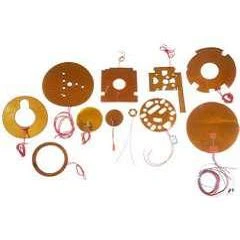
Flexible heaters are thin, lightweight heaters that can be easily bent and shaped to fit various applications. They are commonly used in applications where space is limited or where a uniform heat distribution is required. Flexible heaters can be made from a variety of materials, including silicone rubber, polyimide, and mica.
2. Cartridge Heater
Cartridge heaters are cylindrical heaters that are designed to be inserted into a hole or a cavity. They are commonly used in applications where high temperatures are required, such as in injection molding machines, die casting machines, and packaging equipment. Cartridge heaters can be made from a variety of materials, including stainless steel, brass, and ceramic.
3. Resistance Heater
Resistance heaters are heaters that generate heat by passing an electric current through a resistive element. They are commonly used in applications where a high level of heat output is required, such as in industrial ovens, furnaces, and dryers. Resistance heaters can be made from a variety of materials, including nichrome, kanthal, and copper.
Conclusion
Accurately measuring the heat output of industrial heaters is essential for ensuring optimal performance, energy efficiency, and safety in various industrial applications. By understanding the key methods and considerations for measuring heat output, you can choose the appropriate measurement technique for your application and ensure accurate results. As an industrial heater supplier, we are committed to providing high-quality heaters and technical support to help you achieve your heating goals. If you have any questions or need assistance with measuring the heat output of your industrial heaters, please feel free to contact us for a consultation. We look forward to working with you to meet your heating needs.
References
- Incropera, F. P., & DeWitt, D. P. (2002). Fundamentals of Heat and Mass Transfer. John Wiley & Sons.
- Holman, J. P. (2009). Heat Transfer. McGraw-Hill.
- ASHRAE Handbook: Fundamentals. (2017). American Society of Heating, Refrigerating and Air-Conditioning Engineers.