Ask ten overseas buyers how they found their Chinese supplier and most will name one of three platforms: Alibaba.com, 1688 or Made-in-China. From the outside the three look almost identical - a search box, a grid of supplier listings, a contact button - but they serve different buyers, different product categories and very different levels of sourcing capability. Pick the wrong one and you lose a month to quotes from suppliers who cannot ship to you, or who quote a price that does not survive contact with production.
This guide compares the three on market, buyer base, supplier mix, pricing model and export support, then covers the six channels that produce better shortlists than any marketplace for industrial categories - and explains when a buying agent is cheaper than doing the work yourself.

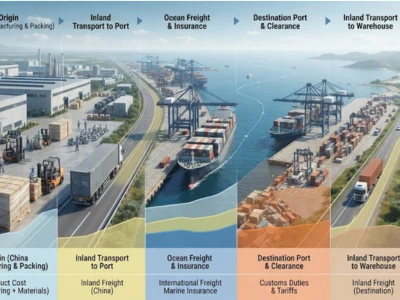
Figure 1. The shortlist is decided at a desk before it is tested in a factory.
What is a B2B platform?
B2B = Business to Business
Buyers are companies, sellers are also companies. It is an online platform for business transactions between enterprises.
Core features of B2B platforms
Both parties to the transaction are merchants, factories or trading companies.
- It is not for selling to individual consumers; it is for corporate procurement, wholesale, OEM private labeling and bulk purchasing.
Order characteristics: large volume, price negotiation, customizable OEM/ODM.
- Most purchases are bulk; buyers will negotiate prices, lead time, samples, customs declaration, logistics and payment terms. Transactions are not completed with a simple checkout.
The core is not "retail sales". Its core function is to source suppliers and receive inquiries.
In many cases, payment is not completed directly on the platform. The platform only serves for display and connection. Follow-up communication is conducted via email or WhatsApp offline, with contracts signed and payments settled offline.
The suitable option depends on how much of the procurement process you intend to manage on your own.
Every procurement project is unique and has its own special requirements.
No single B2B platform fits all procurement models.
When you need to integrate factory verification, negotiation, quality control and shipping coordination into one workflow, a buying agent is a more labor-saving choice.
The three best B2B platforms in China
Alibaba International Station: http://alibaba.com/ (for foreign trade and export); 1688 is Alibaba's domestic wholesale platform; Made-in-China (MIC) is an independent foreign trade B2B platform.
Top choice for procurement from China for overseas markets: Alibaba International Station http://www.alibaba.com/
- Market: Targeting global overseas buyers, export-focused B2B for foreign trade, multi-language interface.
- Buyers: Global importers, cross-border sellers, wholesalers and small & medium B-end clients.
- Merchant composition: Mixed factories and trading companies, with a high proportion of traders. Full-category coverage: consumer goods, hardware, machinery, gifts, home goods, etc.
- Business model: Gold Supplier annual membership + paid PPC ads, RFQ, RTS ready-to-ship products; traffic relies heavily on paid promotion. High inquiry volume, yet fierce price comparison and intense competition.
- Advantages: Largest traffic, complete ecosystem (Trade Assurance, logistics, customs clearance, translation), beginner-friendly, accepts both large and small orders, supports OEM/ODM and RTS ready goods.
- Disadvantages: High advertising costs; significant variance in supplier quality.
Top choice for domestic procurement within China: 1688 http://www.1688.com/
- Market: Domestic B2B wholesale, Chinese interface, RMB quotations, shipments mainly within China
- Buyers: Domestic wholesalers, in-house procurement teams of factories, foreign trade companies (foreign traders source goods here for re-export)
- Merchant composition: A large number of original manufacturers and domestic wholesalers. Prices are domestic ex-factory rates, generally 20‑40% lower than those on Alibaba International Station.
- Business model: TrustPass membership, domestic online transactions. It does not support export services natively; many factories lack foreign trade staff and have no knowledge of customs declaration and foreign exchange settlement.
- Advantages: Abundant supply, direct factory supply, low prices, flexible MOQ, suitable for sample sourcing and small-batch trial orders.
- Disadvantages: No built-in export support, Chinese-only interface. Foreign currency payment, customs declaration and international logistics require a foreign trade company or freight forwarder. Overseas buyers cannot place export orders directly.
- Suitable scenarios: ① Domestic business; ② Foreign trade companies or industrial and trading enterprises sourcing domestic goods and samples for self-managed export. Not suitable for overseas clients to source directly.
Top choice for industrial product procurement from China: Made-in-China http://www.made-in-china.com/
If your procurement covers machinery, tools, hardware, construction goods or other industrial categories, Made-in-China is your best option.
- Market: Export-focused foreign trade B2B, English website, positioned for industrial manufacturing procurement.
- Buyers: Industrial purchasers, engineering companies and equipment importers from Europe and America. Buyers are highly professional. Inquiries are fewer yet higher-quality, with low invalid inquiry rate.
- Merchant composition: Higher proportion of actual manufacturers.
- Business model: Annual membership for certified suppliers. It does not rely on aggressive in-platform bidding; greater emphasis is placed on product specifications, factory qualifications and engineering cases.
- Advantages: Strong presence in industrial tracks: machinery, cutting tools, bearings, valves, mining equipment, chemicals, building materials. Buyers carry strong intent, and price comparison culture is less prevalent.
- Disadvantages: Low traffic for fast-moving consumer goods; overall traffic volume is smaller than Alibaba International Station. Annual membership threshold; suppliers need complete technical specifications and case portfolios.
- Suitable for: Machinery and equipment, spare parts, industrial consumables, custom processing factories aiming to connect with high-value engineering clients and long-term OEM orders.
Comparison of the three major B2B platforms
| Comparison | Alibaba International Station | 1688 | Made-in-China |
| ItemPlatform Type | Export B2B (Overseas-Focused) | Domestic Wholesale B2B | Export B2B (Industrial-Focused) |
| Language | Multi-language | Chinese Only | English Mainly |
| Quotation Currency | USD | CNY | USD |
| Buyer Group | All types of overseas purchasers worldwide | Domestic merchants, foreign traders sourcing supplies | Overseas Industrial / Engineering Buyers |
| Strong Categories |
Full range strong in consumer goods |
Full range of domestic supplies | Machinery, Industrial Components, Equipment |
| Traffic Source | Dominated by in-platform paid bidding | Domestic search engines | Organic traffic from Google overseas SEO |
| Inquiry Features |
High inquiry volume rampant price comparison mixed quality |
Domestic inquiries |
Fewer inquiries high accuracy |
| Foreign Trade Support |
Trade Assurance one-stop customs & logistics |
No built-in export support needs third-party arrangement |
Basic foreign trade tools RFQ inquiry |
| Best For |
Clients with sufficient budget full-category sourcing dedicated operation team |
Domestic businesses foreign traders sourcing supplies |
Factories of industrial equipment and components |
B2B platforms greatly accelerate supplier discovery, yet shift most verification work to buyers and bring procurement risks.
Platform reviews and endorsements are important, but they cannot eliminate procurement risks.
- Many suppliers look similar on paper. Competitive pricing, attractive lead times and polished presentations often fail to reflect actual manufacturing capacity.
- Real risks usually emerge after production kicks off. Poor process control, inconsistent quality standards, capacity bottlenecks, over-reliance on a single source, limited technical expertise, communication gaps and supply chain disruptions may lead to costly issues affecting product quality, delivery performance and customer satisfaction.
- Selecting a reliable manufacturing partner requires evaluation far beyond price. Industrial purchasers must assess production systems, manufacturing capacity, quality management procedures, workforce expertise, equipment condition, supplier stability, business continuity plans and long-term manufacturing readiness.
Structured supplier qualification and factory assessment change the timing of that work: weak candidates are identified before a production commitment, not after the first rejected shipment. See how our supplier verification programme works.
Siji Industrial helps enterprises make informed procurement decisions through structured supplier qualification and manufacturer assessment programs, designed to identify reliable manufacturing partners before production commitments are made.
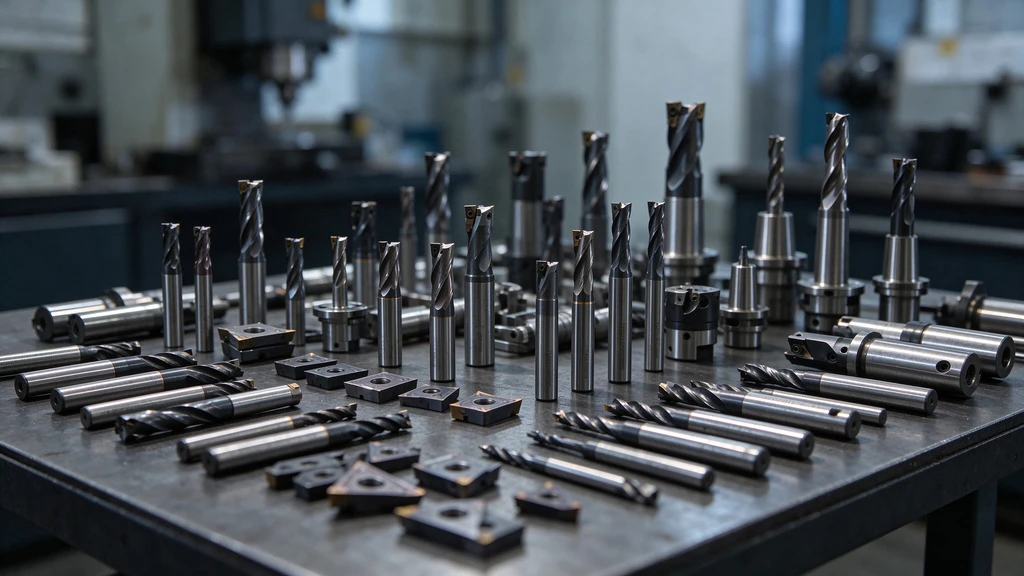
Figure 2. Cutting tools, bearings and valves are the industrial categories where platform fit matters most.
Beyond the platforms: six other ways to find a Chinese supplier
Of course, B2B platforms are not the only option.For industrial categories in particular, the channels below regularly produce a better shortlist than any marketplace.
Industry Trade Shows
- Trade shows are vital offline channels for connecting with suppliers and overseas purchasers. Many capable Chinese factories do not operate on B2B platforms.
- National comprehensive foreign trade exhibitions (for global overseas buyers, full-category coverage)
- Canton Fair – China Import and Export Fair
- Venue: Canton Fair Complex, Guangzhou
Cycle: Two sessions per year, mid-to-late April for Spring Session, mid-to-late October for Autumn Session. China's premier trade fair and barometer of foreign trade.
Exhibits: Divided into three phases, covering machinery tools, hardware, mining equipment, industrial goods, consumer goods, home products, electronics, etc.
Buyers: Overseas purchasers, traders, engineering companies and importers from over 200 countries and regions worldwide.
- China International Import Expo (CIIE)
Venue: Shanghai, early November every year
Positioning: Import-focused, for overseas enterprises to sell goods in China. Suitable for sourcing overseas suppliers instead of acquiring Chinese export manufacturers.
- China-ASEAN Expo (CAEXPO)
Venue: Nanning, September every year
Market: Prioritizing Southeast Asia and RCEP markets; machinery, hardware, building materials and industrial goods targeting ASEAN purchasers.
- East China Fair (ECF)
Venue: Shanghai, March every year
Categories: Light industry, textiles, hardware tools, home goods. Concentrated foreign trade factories in East China, leaning toward light industrial exports.
Specialized industrial equipment exhibitions (your track: CNC cutting tools, machine tools, mining machinery, crushers, bearings, valves)
These shows attract a high share of professional overseas engineering purchasers and dense factory participation. Many industrial manufacturers only attend these specialized shows instead of running B2B platform stores.
- CCMT – China CNC Machine Tool Fair
Venue: Shanghai, April every year, annual event
Exhibits: Machine tools, CNC cutting tools, PCD/CBN inserts, tool holders, measuring tools, mechanical components; the most important exhibition for China's cutting tool industry.
Visitors: Machine tool manufacturers, machining workshops, overseas industrial purchasers.
- CIMT – China International Machine Tool Show
Venue: Beijing, biennial (April in odd-numbered years). China's highest-standard machine tool & tool exhibition.
Larger scale, gathering domestic and overseas cutting tool brands, complete machine tools and precision accessories.
- CIIF – China International Industry Fair, Shanghai
Venue: National Exhibition and Convention Center (Shanghai), mid-October every year
Sectors: CNC machine tools & metalworking, automation, robotics, new materials, components; covering the full chain of cutting tools, bearings, valves and industrial consumables with high internationalization.
Light industry /hardware/consumer goods key exhibitions
- CIHS – China International Hardware Show (Shanghai)
September every year, hand tools, carbide tools, hardware fittings. The largest B2B exhibition for the hardware industry.
Advantages and disadvantages of trade shows
Advantages: Face-to-face communication, physical samples available, direct business card exchange, direct access to factory owners or sales staff, on-site factory visits can be scheduled afterwards; side-by-side comparison of multiple suppliers.
Disadvantages: Travel and expense required, fixed exhibition schedule, time and energy intensive.
Field visits to industrial clusters
Industrial products are highly concentrated in industrial belts:
- Cutting tools - Jiangsu, Guangdong
- Valves - Zhejiang
- Bearings - Shandong
- Crushers & mining equipment - Henan
- Drill bits - Hebei
Advantages: First-hand inspection of production capacity, workshops and quality control, cut out middlemen; suitable for stable long-term bulk supply.
Disadvantages: Time-consuming, only viable for large-volume long-term procurement.
Search Engine Channels
Google Search (to find Chinese export factories /overseas suppliers)
Check official websites, factory photos and qualifications, verify via phone calls, prioritize suppliers who accept factory audits.
Social & Community Channels
WeChat, industry WeChat groups, industry associations
Machinery, hardware and cutting tool industry associations; member directories consist of formal factories. Join industry WeChat groups where many factory sales staff are active; release sourcing requirements.
Industry associations can also provide endorsement and filter shell companies.
Video Account
Many small and medium factories do not use 1688; they post short videos of workshop production. Contact information is available on profile pages. Search by product keywords, send private messages to request quotations and samples. Suitable for small & medium industrial products and spare parts.
Industry Yellow Pages & Enterprise Directories
Filter enterprises by business scope and select industrial cluster regions, export contact lists for bulk phone calls or sourcing emails.
Difficult for overseas clients to operate
Referrals from peers and supply chain contacts (highest success rate)
Referrals from peer companies, freight forwarders, customs brokers, outsourced processing factories and supporting component suppliers.
Freight forwarders connect with a huge pool of factories and hold abundant resources. Build good relationships with reliable forwarders for referrals of quality manufacturers.
Ask existing suppliers to introduce other manufacturers in the same sector.
Advantages: Endorsed by acquaintances, much lower risk of bad sourcing.
| Channel | Advantages | Disadvantages | Suitable |
| Offline Trade Shows Industrial Cluster Visits | Physical factory & samples available, highest trust level | High time & travel cost | Long-term stable bulk procurement |
| Baidu / Google Search for Official Websites | Massive independent-station factories available for search anytime | Self-verification required to filter middlemen | Regular new supplier sourcing, core alternative to B2B platforms |
| Directly reach foreign trade decision-makers | Variable reply rate | Find trading & manufacturing factories with export capability | |
| Industry Associations Referrals | Endorsed, low risk of pitfalls | Resource depends on connection network | Core primary suppliers |
| Short Video Platforms | Abundant small & medium factories, fast response | Uneven quality, mostly small manufacturers | Sample orders & small lots |
| Enterprise Directories | Bulk acquisition of contact lists | Heavy screening workload | Broad outreach development |
Buying Agents
A buying agent is a third-party organization or individual entrusted by the buyer to source goods, request and compare quotations, conduct negotiations, follow up orders, arrange inspections and coordinate logistics on the buyer's behalf in the market, compensated via service fees or commission.
| Role | Stance | Title to Goods | Revenue Source |
| Buying Agent | Represent Buyer | No ownership of goods | Commission / Service Fee |
| Export Agent | Represent Seller Factory | No ownership of goods | Commission |
| Trader | Conduct own business | Hold title to goods | Profit from buying & selling margin |
Applicable Scenarios
Overseas clients unfamiliar with China's supply chain who prefer not to liaise with numerous factories directly and engage a local China-based buying agent
Domestic enterprises without in-house procurement teams that outsource sourcing, factory audit and order follow-up
Multi-item small-batch procurement where direct communication with factories is inefficient.
We are ready to serve you whenever you need
Siji Industrial runs the procurement process end to end, so the buyer deals with one accountable contact instead of twenty supplier threads.
Every industrial shipment is released against a standardized, full-process quality supervision step - which is how consistency is held across orders, and why overseas partners receive the same product standard each time.
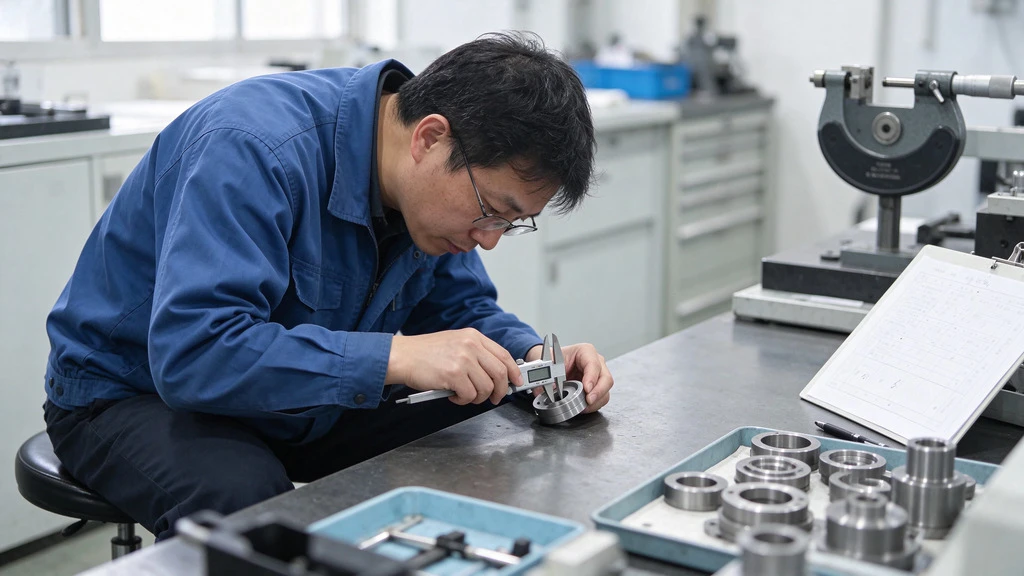
Figure 3. Quality is settled at the inspection bench, not in the supplier's listing.
As a global industrial trading platform, we combine a large upstream supply base with one-stop cross-border procurement: our team handles commercial negotiation, order follow-up, international freight coordination and long-term after-sales support for buyers and suppliers on both sides.
The work is organized around six commitments:
-
Supplier qualification and verification
-
Factory audits and production evaluation
-
Transparent procurement and cost analysis
-
Multi-stage quality control
-
Supply-chain risk management
-
Long-term supplier management