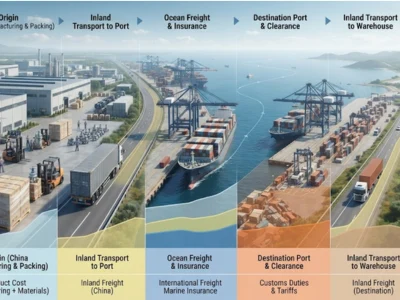
Global procurement has become increasingly complex over the past decade. Rising labor costs, geopolitical uncertainty, supply chain disruptions, evolving trade policies, and higher customer expectations have fundamentally changed how companies evaluate international sourcing opportunities. For procurement managers, sourcing specialists, OEM manufacturers, and industrial buyers, success is no longer measured simply by obtaining the lowest purchase price. Instead, it depends on building a resilient procurement system capable of balancing cost, quality, delivery reliability, technical capability, and long-term supplier performance.
Despite growing discussions around supply chain diversification, China continues to be the world's most comprehensive industrial manufacturing base. From precision-machined components and industrial automation equipment to fabricated metal products, bearings, valves, electrical assemblies, and custom OEM parts, Chinese manufacturers remain deeply integrated into global industrial supply chains. The country's competitive advantage extends far beyond labor costs. Mature manufacturing clusters, extensive supplier ecosystems, advanced production technologies, and highly developed export infrastructure allow buyers to source complex industrial products efficiently while maintaining production scalability.
However, sourcing successfully in China requires far more than identifying a supplier through an online marketplace. Many procurement failures occur not because Chinese manufacturers lack capability, but because buyers enter the sourcing process without a structured procurement strategy. Selecting suppliers based solely on quotations, skipping factory verification, approving products based only on prototype samples, or overlooking production management systems frequently results in quality issues, delayed deliveries, hidden costs, and unstable long-term partnerships.
Professional procurement organizations approach industrial sourcing differently. Rather than treating sourcing as a purchasing transaction, they manage it as a structured decision-making process that begins long before supplier selection and continues well beyond the first shipment. Every stage-from procurement planning and supplier qualification to factory audits, production monitoring, quality assurance, and supplier performance management-contributes to reducing uncertainty and strengthening supply chain resilience.
This guide combines procurement best practices with practical China industrial sourcing strategies to help global buyers establish a systematic sourcing framework. Instead of offering generic sourcing tips, it explains how experienced procurement professionals evaluate manufacturers, manage supplier risks, and build long-term sourcing relationships that create sustainable competitive advantages.

Why Global Buyers Continue to Source Industrial Products from China
Although manufacturing capabilities have expanded across Southeast Asia, Eastern Europe, India, and Latin America, China remains the preferred sourcing destination for a significant portion of the world's industrial products. This leadership position is not maintained simply because of competitive pricing. Instead, China has developed one of the world's most complete industrial ecosystems, enabling manufacturers to deliver technical capability, production flexibility, engineering support, and supply chain integration at a scale few countries can match.
Understanding why China continues to dominate industrial sourcing helps buyers make procurement decisions based on business objectives rather than market perceptions.
China's Manufacturing Ecosystem Extends Far Beyond Low-Cost Production
A common misconception is that companies source from China primarily to reduce labor costs. While cost competitiveness remains important for certain industries, it is no longer the primary reason many global manufacturers maintain sourcing operations in China.
China's greatest strength lies in the concentration of complete manufacturing ecosystems. Industrial clusters have developed over decades, bringing together raw material suppliers, component manufacturers, tooling specialists, precision machining facilities, surface treatment providers, testing laboratories, logistics companies, and export service providers within relatively small geographic regions. This interconnected ecosystem significantly improves procurement efficiency by reducing transportation time, simplifying supplier coordination, and accelerating engineering collaboration.
For example, an OEM manufacturer sourcing precision mechanical assemblies may find CNC machining suppliers, heat treatment specialists, surface finishing companies, packaging providers, and logistics operators located within the same industrial region. Instead of coordinating multiple suppliers across different countries, procurement teams can manage an integrated manufacturing network that supports faster product development and more efficient production.
Beyond industrial clustering, Chinese manufacturers continue investing in automation, digital manufacturing, process optimization, and engineering capabilities. Many factories now provide Design for Manufacturability (DFM) recommendations, prototype development, tooling design, and production optimization services that were previously available only through specialized engineering firms.
For industrial buyers, these ecosystem advantages frequently generate greater long-term value than unit price reductions alone.
Why Industrial Buyers Continue to Choose China
From a procurement perspective, sourcing decisions should balance total business value rather than focusing exclusively on purchase cost. Successful procurement organizations evaluate suppliers based on their ability to support operational continuity, product quality, engineering collaboration, and future business growth.
China continues to provide several strategic advantages.
First, supplier availability remains unmatched across most industrial sectors. Buyers can typically identify multiple qualified manufacturers capable of producing similar products, creating competitive sourcing environments while reducing dependence on individual suppliers.
Second, manufacturing specialization has become increasingly sophisticated. Certain regions have developed internationally recognized expertise in industries such as industrial machinery, precision metal fabrication, electrical equipment, automotive components, industrial fasteners, casting, forging, plastic injection molding, and automation systems. This specialization enables buyers to source from manufacturers with extensive technical knowledge rather than general-purpose production facilities.
Third, production scalability allows suppliers to support customers throughout the entire product lifecycle. Many manufacturers are capable of producing engineering prototypes, pilot production batches, and high-volume commercial production within the same facility, reducing the need for supplier transitions as demand increases.
Finally, China's logistics infrastructure continues to support efficient global trade. Modern ports, extensive transportation networks, experienced freight forwarders, and well-developed export services enable manufacturers to deliver products to virtually every major international market.
Procurement Insight
Many organizations continue debating whether they should source from China or move production elsewhere. In practice, experienced procurement teams rarely evaluate sourcing destinations using a simple "country versus country" comparison. Instead, they assess which location provides the strongest combination of manufacturing capability, supplier maturity, engineering resources, logistics efficiency, and total landed cost for each specific product category.
The most resilient global supply chains often combine suppliers from multiple countries while allowing China to remain the primary sourcing destination for products where its manufacturing ecosystem creates measurable competitive advantages.
When China May Not Be the Best Choice
Although China offers significant advantages for industrial procurement, it should not automatically become the default sourcing destination for every project.
Alternative manufacturing locations may provide stronger commercial value when products require regional manufacturing to satisfy customer preferences, when trade agreements substantially reduce import duties, when delivery speed outweighs production cost advantages, or when organizations pursue geographic diversification to improve supply chain resilience.
Likewise, highly customized products with extremely low annual demand may sometimes be manufactured more economically closer to the end market, particularly if engineering changes occur frequently.
Professional procurement therefore focuses on selecting the right sourcing location for each product rather than attempting to centralize every purchasing decision within a single country.
Real Procurement Scenario
A European industrial equipment manufacturer planned to relocate its complete supplier base outside China following increasing transportation costs. During the procurement review, the sourcing team evaluated not only manufacturing costs but also supplier capability, production stability, engineering support, tooling investment, defect rates, and logistics performance.
The analysis showed that while several standardized components could be competitively sourced from neighboring countries, highly engineered precision assemblies continued to achieve lower total landed costs when manufactured in China because suppliers possessed stronger technical expertise, higher automation levels, and significantly lower defect rates.
Instead of relocating every product, the company adopted a hybrid sourcing strategy that diversified low-risk components while retaining strategically important products within its established Chinese supplier network.
Procurement Recommendation
Before deciding whether China is the appropriate sourcing destination, buyers should evaluate total procurement objectives rather than labor cost alone. Products requiring engineering collaboration, mature supply chains, scalable production, and consistent quality often benefit from China's manufacturing ecosystem, while standardized or regionally sensitive products may justify alternative sourcing strategies.
Build Your Procurement Strategy Before Contacting Suppliers
Many sourcing projects begin with a request to "find a factory." Although this appears logical, experienced procurement professionals recognize that supplier selection is only one stage of a much broader sourcing process. Contacting manufacturers before establishing procurement objectives often produces inconsistent quotations, communication delays, engineering misunderstandings, and significant project revisions later in production.
Professional sourcing begins with procurement planning. By defining technical requirements, commercial objectives, quality expectations, sourcing timelines, and supplier evaluation criteria before initiating supplier communication, buyers create a structured decision-making process that improves quotation quality while reducing procurement uncertainty.
Define Technical, Commercial, and Quality Requirements
Effective procurement begins with complete product definition rather than a simple product description.
Technical documentation should clearly communicate engineering drawings, dimensional tolerances, material specifications, surface treatment requirements, performance expectations, testing procedures, packaging standards, labeling requirements, and applicable regulatory certifications. When sourcing OEM products, buyers should also provide branding requirements, documentation expectations, intellectual property considerations, and any customer-specific technical standards.
Commercial requirements deserve the same level of attention. Expected annual demand, forecast purchasing volumes, preferred Incoterms, payment structures, warranty expectations, target lead times, inventory strategies, and after-sales support requirements all influence supplier quotations and production planning. Manufacturers can only prepare realistic commercial proposals when they fully understand the procurement objectives behind the project.
Quality expectations should never rely on subjective descriptions such as "high quality" or "premium quality." Instead, procurement teams should establish measurable acceptance criteria covering inspection methods, sampling standards, allowable defect levels, testing requirements, documentation procedures, and traceability expectations. Objective quality standards reduce interpretation differences while creating a common benchmark throughout production.
Evaluate Total Landed Cost Instead of Unit Price
One of the most expensive procurement mistakes is comparing suppliers using purchase price alone.
Professional buyers evaluate total landed cost, which reflects the complete financial impact of sourcing decisions from supplier selection through final product delivery.
In addition to unit pricing, procurement teams should consider tooling investment, production setup costs, packaging requirements, inland transportation, international freight, customs duties, import taxes, quality inspections, inventory carrying costs, warranty expenses, engineering changes, and potential quality failures.
A supplier offering the lowest quotation may ultimately become the highest-cost supplier if inconsistent quality generates production delays, customer complaints, or repeated corrective actions.
Conversely, manufacturers with slightly higher pricing often reduce total procurement costs by delivering greater production stability, stronger engineering support, and fewer operational disruptions.
Procurement Insight
Unit price is a purchasing metric. Total landed cost is a business metric.
Organizations focused only on quotation comparisons often optimize individual purchase orders while increasing overall supply chain costs. Procurement teams that evaluate sourcing decisions through total landed cost generally make more sustainable supplier selections because they consider the entire product lifecycle rather than the initial transaction.
Develop a Realistic Procurement Timeline
Industrial sourcing rarely progresses in a straight line. Engineering reviews, supplier qualification, quotation revisions, tooling development, sample approval, pilot production, mass production, quality inspections, export preparation, and international transportation all require careful coordination.
Rather than creating aggressive schedules based solely on customer delivery expectations, procurement teams should establish realistic procurement milestones that reflect actual manufacturing processes.
Well-structured sourcing timelines typically include supplier qualification, RFQ issuance, quotation evaluation, technical clarification, sample validation, commercial negotiations, tooling completion, trial production, mass production, inspection planning, shipping preparation, and logistics coordination.
Seasonal factors should also be incorporated into procurement planning. Chinese public holidays, raw material shortages, shipping congestion, and peak export seasons frequently influence production schedules. Factoring these variables into procurement plans reduces the likelihood of unexpected delivery disruptions.
Prepare a Structured RFQ Package
A Request for Quotation (RFQ) should serve as a standardized procurement document rather than a simple pricing request.
Every supplier should receive identical technical drawings, material specifications, expected purchasing volumes, quality requirements, packaging instructions, preferred trade terms, delivery expectations, and supporting engineering documentation. Standardized RFQs improve quotation consistency while enabling procurement teams to compare suppliers objectively.
High-quality RFQs also reveal supplier capability. Manufacturers that identify technical risks, recommend process improvements, suggest cost optimization opportunities, or clarify engineering assumptions often demonstrate stronger technical competence than suppliers responding with pricing alone.
Real Procurement Scenario
A North American automation company requested quotations for fabricated steel assemblies from six Chinese suppliers. The original RFQ contained only product drawings and annual demand estimates, resulting in quotations that differed by more than 35%.
After revising the RFQ to include welding specifications, inspection requirements, packaging standards, delivery schedules, surface treatment requirements, and Incoterms, the suppliers submitted significantly more consistent proposals. The procurement team was then able to compare manufacturing capability, production planning, and total landed cost instead of attempting to interpret inconsistent commercial assumptions.
Procurement Recommendation
Successful industrial sourcing begins long before the first supplier receives an inquiry. Procurement teams that invest time in defining requirements, evaluating sourcing objectives, and preparing comprehensive RFQs typically experience faster supplier selection, more accurate quotations, fewer engineering revisions, and stronger long-term supplier relationships throughout the sourcing lifecycle.
Where to Find Reliable Chinese Manufacturers
Finding suppliers has never been easier. With online marketplaces, search engines, trade shows, and social networking platforms, buyers can identify hundreds of potential suppliers within a few hours. However, experienced procurement professionals understand that finding suppliers and finding qualified manufacturers are two entirely different tasks.
The objective of supplier discovery is not to collect the largest possible supplier database. It is to build a manageable pool of manufacturers that are genuinely capable of supporting long-term production requirements. This distinction is particularly important in China, where thousands of companies may offer similar products while differing significantly in manufacturing capability, engineering expertise, quality management, and operational maturity.
Professional sourcing therefore begins by expanding the supplier pool before systematically narrowing it through structured qualification and evaluation.

Use Multiple Supplier Discovery Channels
No single sourcing channel consistently produces the best suppliers. Each channel offers different advantages, and experienced procurement teams typically combine several approaches before beginning supplier qualification.
Online B2B marketplaces such as Alibaba, Global Sources, Made-in-China, and 1688 remain effective tools for identifying potential manufacturers. These platforms provide access to extensive supplier databases, allowing buyers to compare product categories, certifications, production capabilities, export markets, and customer reviews. They are particularly useful during the early stages of supplier research because they significantly reduce the time required to identify potential sourcing candidates.
However, marketplace profiles should never be treated as proof of manufacturing capability. Verification badges, years of platform membership, or positive customer reviews indicate commercial activity rather than production excellence. Some suppliers operate as manufacturers, while others function primarily as trading companies or coordinate production through subcontractors. Professional buyers therefore use online platforms as information sources rather than supplier approval systems.
Industrial exhibitions provide a different type of value. Trade shows allow procurement teams to evaluate product quality directly, discuss technical requirements with engineering personnel, compare competing manufacturers in a single location, and assess suppliers beyond marketing materials. Face-to-face communication often reveals a supplier's technical competence, responsiveness, and willingness to support engineering collaboration far more effectively than online correspondence.
Industry associations, chambers of commerce, engineering organizations, and existing supplier networks represent another valuable source of qualified manufacturers. Companies with established reputations frequently rely less on digital marketing and more on long-term customer relationships. As a result, referral-based sourcing often uncovers technically capable manufacturers that may receive relatively little visibility through online marketplaces.
Finally, professional sourcing partners can significantly improve supplier discovery, particularly for organizations entering unfamiliar product categories or sourcing from China for the first time. Their local market knowledge enables buyers to identify manufacturers that may not actively market internationally while filtering out suppliers with limited production capability.
Procurement Insight
Many buyers assume that the supplier appearing first in search results is the strongest manufacturer. In reality, online visibility often reflects marketing investment rather than manufacturing excellence.
Some highly capable industrial manufacturers maintain relatively modest online profiles because their production capacity is already supported by long-term customers. Conversely, companies investing heavily in digital marketing may possess limited engineering capability or rely extensively on subcontractors.
Supplier discovery should therefore be viewed as the beginning of procurement due diligence-not its conclusion.
Compare Supplier Discovery Channels Objectively
Each sourcing channel supports different procurement objectives. Rather than relying exclusively on one method, procurement teams should understand how each contributes to supplier identification.
| Supplier Discovery Channel | Best Used For | Primary Advantages | Potential Limitations |
|---|---|---|---|
| Online B2B Platforms | Building an initial supplier database | Large supplier pool, convenient comparison, rapid communication | Requires extensive verification and qualification |
| Industrial Trade Shows | Technical discussions and supplier evaluation | Direct product inspection, stronger relationship building | Travel costs and limited exhibition schedules |
| Industry Associations | Specialized manufacturing sectors | Higher-quality referrals and industry credibility | Smaller supplier pool |
| Existing Supplier Referrals | Expanding trusted supplier networks | Proven collaboration and complementary manufacturing capability | Limited diversity |
| Professional Sourcing Partners | Complex procurement projects | Local expertise, supplier verification, factory access | Service fees should be evaluated against risk reduction |
For strategic industrial procurement, the objective is not to identify dozens of suppliers but to establish a shortlist of manufacturers that genuinely deserve detailed evaluation.
Build an Initial Long List Before Making Comparisons
One mistake frequently made by inexperienced buyers is evaluating suppliers too early.
Professional procurement teams begin by creating a broad Long List of potential suppliers without immediately attempting to determine which manufacturer is "best." This approach reduces selection bias while ensuring that procurement decisions are based on comprehensive market research rather than limited supplier exposure.
Information collected during this stage typically includes:
Product specialization
Manufacturing location
Export experience
Production scale
Core manufacturing processes
Major certifications
Primary customer industries
Available engineering resources
The Long List should intentionally contain more suppliers than will ultimately be approved. Building a broader candidate pool increases competitive pressure while improving the likelihood of identifying manufacturers that align with both current and future procurement objectives.
Real Procurement Scenario
A European automation equipment manufacturer initially shortlisted three suppliers based solely on Alibaba search rankings. Although all three suppliers appeared qualified online, further market research identified two additional manufacturers through an industry association that specialized exclusively in precision industrial assemblies.
Following technical evaluations and factory audits, one of these referral-based manufacturers became the preferred supplier because it demonstrated stronger engineering capability, automated inspection systems, and significantly better production planning despite maintaining almost no international online marketing presence.
The procurement team later concluded that limiting supplier discovery to a single sourcing platform would have excluded the strongest manufacturing partner.
Procurement Recommendation
Supplier discovery should prioritize diversity rather than speed. Combining online research, industry referrals, trade shows, and local sourcing expertise typically produces a stronger supplier pipeline than relying on any single discovery channel. Building a broad Long List creates the foundation for objective supplier qualification while reducing the risk of overlooking highly capable manufacturers.
Build a Structured Supplier Qualification Funnel
Supplier discovery identifies potential manufacturers. Supplier qualification determines whether those manufacturers are capable of becoming reliable long-term procurement partners.
One of the biggest differences between professional procurement organizations and inexperienced buyers is the way suppliers are filtered before purchasing decisions are made. Rather than comparing quotations immediately, experienced procurement teams progressively narrow the supplier pool through multiple evaluation stages, reducing uncertainty before significant commercial commitments occur.
This structured qualification process minimizes procurement risk while creating a repeatable sourcing methodology applicable across different industries, products, and manufacturing regions.
Stage One: Create a Long List
The qualification process begins with the Long List developed during supplier discovery.
At this stage, buyers deliberately avoid making purchasing decisions. Instead, they focus on gathering sufficient market intelligence to ensure multiple sourcing alternatives remain available throughout the evaluation process.
The Long List should contain manufacturers capable of producing the required products, even if their suitability has not yet been confirmed.
Maintaining a broad supplier pool encourages objective evaluation rather than premature supplier preference.
Stage Two: Perform Preliminary Supplier Screening
The next objective is eliminating suppliers that clearly fail to satisfy minimum procurement requirements.
Preliminary screening typically evaluates:
Business registration
Manufacturing versus trading company status
Export experience
Product specialization
Production capacity
Basic quality certifications
Financial stability indicators
International customer experience
This stage often reduces the supplier pool substantially while requiring relatively little investment from the procurement team.

Stage Three: Conduct Supplier Self-Assessments
After preliminary screening, procurement professionals request structured supplier questionnaires that provide deeper insight into operational capability.
Rather than relying exclusively on brochures or marketing materials, supplier self-assessments collect standardized information regarding:
Manufacturing facilities
Production equipment
Engineering personnel
Quality management systems
Testing capability
Workforce structure
Continuous improvement programs
Capacity utilization
Environmental and social compliance
Because every supplier answers the same questions, procurement teams can compare capabilities objectively rather than relying on subjective impressions.
Stage Four: Verify Capabilities Through Factory Audits
Documentation alone cannot confirm manufacturing capability.
Factory audits verify whether suppliers actually operate according to the standards described during earlier qualification stages.
During an audit, procurement professionals evaluate production organization, manufacturing processes, engineering resources, equipment condition, process control, quality systems, warehouse management, traceability, and operational discipline.
This stage frequently identifies hidden risks that remain invisible during online communication, including weak production planning, inadequate process documentation, excessive outsourcing, or inconsistent quality management.
Procurement Insight
Supplier qualification should focus on reducing uncertainty rather than confirming assumptions.
Many procurement failures occur because buyers seek evidence supporting their preferred supplier instead of objectively evaluating every candidate. A structured qualification funnel prevents emotional decision-making by requiring every supplier to satisfy the same evaluation criteria before progressing to the next stage.
Stage Five: Establish an Approved Supplier List
Manufacturers that successfully complete qualification become part of the organization's Approved Supplier List (ASL).
Approval should never be considered permanent.
Professional procurement organizations continuously monitor supplier performance and periodically reassess manufacturers to ensure they continue satisfying business requirements as production volumes, technologies, and customer expectations evolve.
Suppliers demonstrating consistently strong performance may eventually become Preferred Suppliers responsible for strategically important procurement programs, while suppliers exhibiting declining performance may require corrective action, development plans, or eventual replacement.
This continuous evaluation philosophy transforms supplier management from a one-time approval process into an ongoing procurement discipline.
Supplier Qualification Framework
| Qualification Stage | Primary Objective | Expected Outcome |
|---|---|---|
| Long List | Identify potential suppliers | Broad supplier database |
| Preliminary Screening | Remove unsuitable suppliers | Qualified candidate pool |
| Supplier Self-Assessment | Evaluate organizational capability | Comparable supplier information |
| Factory Audit | Verify manufacturing capability | Objective operational assessment |
| Approved Supplier List | Approve qualified manufacturers | Long-term sourcing candidates |
Procurement Recommendation
Supplier qualification should never become a race to identify the fastest supplier. Organizations that invest additional time verifying manufacturing capability before issuing purchase orders typically experience fewer quality problems, stronger supplier relationships, and significantly lower procurement risk throughout the product lifecycle.
How to Evaluate Chinese Suppliers Beyond Price
Once suppliers have been qualified, the next challenge is determining which manufacturer creates the greatest long-term business value.
Many sourcing failures originate at this stage because procurement teams compare quotations rather than supplier capability. While pricing remains an important commercial factor, it represents only one component of supplier performance. The strongest procurement decisions balance quality, cost, delivery reliability, engineering capability, financial stability, and long-term collaboration potential.
Professional sourcing organizations therefore evaluate suppliers using structured scorecards rather than subjective judgment.
Evaluate Quality Capability Rather Than Inspection Results
Product quality should never be measured solely by finished goods inspection.
Professional buyers examine whether quality is systematically built into manufacturing processes through documented work instructions, process control, operator training, equipment calibration, statistical monitoring, traceability, and continuous improvement.
A factory capable of preventing defects consistently creates greater procurement value than one relying heavily on final inspection to identify problems after production has already occurred.
Distinguish Between Price and Total Cost Competitiveness
Competitive suppliers continuously improve manufacturing efficiency rather than simply reducing selling prices.
Procurement teams should evaluate:
Production efficiency
Material utilization
Tooling capability
Automation level
Lean manufacturing practices
Continuous cost reduction initiatives
Manufacturers capable of reducing operational waste often maintain stronger long-term competitiveness while preserving product quality.
Evaluate Delivery Reliability Instead of Lead Time Alone
Lead time represents only one dimension of delivery performance.
Professional buyers also examine production scheduling systems, capacity planning, inventory management, supplier coordination, production flexibility, and historical delivery consistency.
A supplier promising short lead times without adequate planning systems frequently presents greater procurement risk than one offering slightly longer but highly reliable delivery schedules.
Assess Engineering Capability
Industrial sourcing increasingly depends on technical collaboration rather than manufacturing execution alone.
Suppliers with experienced engineering teams contribute value by reviewing product designs, improving manufacturability, optimizing production processes, reducing manufacturing costs, supporting prototype development, and solving technical challenges throughout production.
Engineering capability becomes particularly important for OEM manufacturing, custom industrial equipment, precision components, and continuous product development projects.
Review Financial Stability and Business Sustainability
Financially healthy suppliers generally invest more consistently in equipment, employee development, process improvement, and production expansion.
Although detailed financial information may not always be available, procurement professionals evaluate operational stability through business longevity, facility investment, production growth, customer diversification, workforce retention, and long-term strategic planning.
Stable businesses typically provide stronger supply continuity than suppliers operating under financial pressure.
Procurement Insight
Capability and capacity are often confused during supplier evaluation.
A manufacturer may possess excellent technical capability but insufficient production capacity to support future demand. Conversely, a large factory may operate substantial production capacity while lacking the engineering expertise required for technically demanding products.
Professional procurement evaluates both dimensions independently because sustainable sourcing requires suppliers capable of producing the right products in the right quantities while maintaining consistent quality standards.
Build a Balanced Supplier Scorecard
Rather than allowing purchase price to dominate supplier selection, procurement organizations frequently apply weighted evaluation models covering multiple performance categories.
| Evaluation Category | Primary Assessment Question |
|---|---|
| Quality | Can the supplier consistently achieve required quality standards? |
| Cost | Does the supplier provide competitive total landed cost? |
| Delivery | Can production remain stable under changing demand? |
| Engineering | Can the supplier support technical development and problem solving? |
| Service | Does communication remain responsive and transparent? |
| Financial Stability | Can the supplier support long-term cooperation? |
| ESG & Compliance | Does the supplier satisfy environmental, social, and regulatory expectations? |
Real Procurement Scenario
A machinery manufacturer evaluated two suppliers producing nearly identical quotations for fabricated industrial assemblies. Supplier A offered pricing approximately 6% lower than Supplier B, making it appear to be the stronger commercial option.
However, the evaluation scorecard revealed significant differences. Supplier B maintained automated inspection systems, stronger engineering resources, documented preventive maintenance programs, and a consistent record of on-time delivery. Although the initial purchase price was slightly higher, production disruptions declined substantially after supplier selection, resulting in lower inventory costs and fewer customer complaints.
The procurement team ultimately concluded that the higher-priced supplier delivered the lower total procurement cost over the life of the project.
Procurement Recommendation
Supplier evaluation should answer one fundamental question: Which manufacturer is most likely to support reliable long-term business success?
Organizations that evaluate suppliers through structured scorecards rather than quotation comparisons consistently build stronger supply chains, reduce operational risk, and achieve lower total procurement costs over time.
Conduct Factory Audits Like Professional Buyers
Many procurement teams believe supplier qualification is complete once they have reviewed certifications, compared quotations, and approved product samples. In reality, these activities provide only a partial understanding of a supplier's true manufacturing capability.
A factory may produce an excellent prototype while lacking the systems, management discipline, or production controls required to maintain consistent quality during mass production. Likewise, impressive equipment does not automatically translate into reliable manufacturing performance if production planning, quality management, and engineering support are poorly executed.
This is why experienced procurement organizations treat factory audits as one of the most valuable stages of supplier qualification. Rather than looking for isolated problems, they evaluate whether the supplier has established a manufacturing system capable of supporting stable long-term production.
Evaluate Management Capability Before Evaluating Machines
Production equipment can be purchased relatively quickly. Effective management systems cannot.
One of the first objectives of a factory audit is understanding how the business is managed. Procurement teams should determine whether responsibilities are clearly defined, production decisions are based on standardized procedures, and management actively drives continuous improvement rather than reacting only when problems occur.
Areas worth reviewing include:
Organizational structure
Production planning responsibilities
Quality responsibility assignment
Internal communication procedures
Customer complaint handling
Corrective action management
Continuous improvement programs
Factories with structured management systems generally respond more effectively to engineering changes, urgent delivery requests, and unexpected production challenges.
Procurement Insight
Two factories may manufacture identical products using similar equipment while delivering completely different long-term performance.
The difference often lies not in machinery, but in management maturity. Standardized operating procedures, preventive maintenance, production discipline, employee training, and data-driven decision-making determine whether a factory can consistently reproduce the same quality over thousands of production cycles.
Professional buyers therefore audit management systems before making purchasing decisions based on equipment alone.
Assess Manufacturing Capability
Manufacturing capability extends beyond the number of machines installed on the factory floor.
Procurement professionals should understand how products move through the production process, how capacity is managed, where bottlenecks occur, and whether manufacturing systems can accommodate future business growth.
Typical evaluation areas include:
Production flow
Equipment condition
Process capability
Automation level
Tooling management
Preventive maintenance
Capacity utilization
Production flexibility
Instead of asking whether a supplier can manufacture today's order, buyers should determine whether the factory can consistently support future production requirements as order volumes increase.

Distinguish Between Capability and Capacity
Many procurement teams mistakenly use the terms manufacturing capability and production capacity interchangeably.
Capability refers to whether a supplier possesses the technical knowledge, equipment, engineering resources, and quality systems necessary to manufacture a product correctly.
Capacity refers to how much production the factory can realistically deliver within a given period while maintaining quality and delivery commitments.
A factory may demonstrate excellent machining capability during sample production but lack sufficient equipment or workforce capacity to support large-volume orders. Conversely, a high-capacity manufacturer may possess extensive production resources while lacking the engineering expertise required for technically demanding products.
Professional supplier evaluation considers both independently.
Review Quality Management Systems
One of the most important objectives of a factory audit is determining whether quality is controlled throughout manufacturing rather than inspected only after production has finished.
Mature manufacturers establish standardized quality systems covering every production stage, beginning with incoming material inspection and continuing through process monitoring, final inspection, packaging, and shipment.
During the audit, buyers should evaluate:
Incoming material inspection
Process inspection procedures
Final inspection standards
Measurement equipment calibration
Traceability systems
Non-conformance management
Corrective and preventive actions (CAPA)
Document control
Although certifications such as ISO 9001 provide useful reference points, they should not replace direct observation of how quality systems operate in daily production.
Real Procurement Scenario
A buyer sourcing precision industrial brackets evaluated two suppliers that both held ISO 9001 certification.
During the factory audit, Supplier A demonstrated documented work instructions at every workstation, real-time production monitoring, scheduled equipment calibration, and complete product traceability.
Supplier B possessed the same certification but relied heavily on operator experience, maintained inconsistent inspection records, and lacked documented corrective action procedures.
Although both factories satisfied certification requirements, the audit revealed a substantial difference in operational maturity. The procurement team ultimately selected Supplier A because its manufacturing processes were significantly more repeatable and less dependent on individual operators.
Evaluate Engineering Capability
Engineering capability has become an increasingly important supplier selection criterion for industrial procurement.
Modern manufacturers are expected not only to produce components according to drawings but also to contribute technical expertise throughout product development and production.
During factory audits, procurement teams should determine whether engineering departments are capable of:
Reviewing customer drawings
Optimizing manufacturability
Designing production tooling
Developing prototypes
Supporting engineering changes
Solving production problems
Conducting root cause analysis
Manufacturers with strong engineering teams often generate measurable cost savings and quality improvements throughout the product lifecycle.
Review Operational Cost Management
Competitive pricing should result from manufacturing efficiency rather than aggressive cost cutting.
During factory audits, buyers should evaluate how suppliers improve operational performance through automation, lean manufacturing, process optimization, waste reduction, preventive maintenance, and employee development.
Factories committed to continuous operational improvement generally remain more competitive over long-term sourcing relationships than suppliers relying solely on low labor costs.
Assess Delivery Reliability
Delivery performance depends on much more than quoted lead times.
Professional buyers review how factories manage production scheduling, capacity planning, material procurement, inventory control, supplier coordination, and order prioritization.
Questions worth exploring include:
How are production schedules created?
How are urgent orders managed?
How is supplier performance monitored?
How are material shortages handled?
What happens when production falls behind schedule?
Factories operating with structured planning systems are typically better prepared to maintain delivery commitments during periods of changing customer demand.
Evaluate Financial Stability
Financially unstable suppliers often introduce risks that remain invisible until production has already begun.
Although complete financial statements may not always be available, procurement teams can evaluate business stability through operational indicators such as facility investment, equipment modernization, workforce stability, production expansion, customer diversity, and long-term business planning.
Suppliers investing consistently in manufacturing capability generally demonstrate stronger commitment to sustainable business development.
Review ESG and Regulatory Compliance
Global procurement increasingly requires suppliers to satisfy environmental, social, and governance (ESG) expectations in addition to traditional commercial requirements.
Factory audits should therefore evaluate:
Environmental management
Waste disposal practices
Worker health and safety
Labor compliance
Ethical business conduct
Regulatory certifications
Corporate governance
For multinational organizations, ESG performance has become an important component of supplier risk management rather than a standalone compliance exercise.
Factory Audit Checklist
| Audit Category | Key Evaluation Areas |
|---|---|
| Management | Organizational structure, leadership, continuous improvement |
| Manufacturing | Equipment, production flow, automation, process capability |
| Quality | Inspection systems, traceability, process control, CAPA |
| Engineering | Technical support, tooling, DFM capability, problem-solving |
| Cost Management | Lean manufacturing, efficiency, automation, waste reduction |
| Delivery | Capacity planning, scheduling, inventory management |
| Financial Stability | Business continuity, investment, operational sustainability |
| ESG & Compliance | Environmental, labor, safety, regulatory compliance |
Procurement Recommendation
A factory audit should not be viewed as a one-time approval activity. As suppliers expand production, introduce new equipment, or enter different markets, periodic reassessments help ensure manufacturing capability continues to support changing procurement requirements. Organizations that regularly audit strategic suppliers typically identify operational risks earlier and build stronger long-term sourcing partnerships.
Step-by-Step China Industrial Sourcing Process
Successful sourcing is the result of disciplined execution rather than isolated purchasing activities. Each stage of the sourcing process builds upon the previous one, progressively reducing uncertainty before larger commercial commitments are made.
Professional procurement organizations therefore follow structured sourcing workflows that integrate technical evaluation, supplier management, quality assurance, and logistics planning into a single procurement system.
Step 1: Define Product Requirements
Every sourcing project begins with comprehensive product documentation.
Rather than sending basic product descriptions, buyers should provide complete engineering drawings, material specifications, tolerances, performance requirements, packaging standards, testing procedures, labeling instructions, certifications, and forecast purchasing volumes.
Clear documentation minimizes supplier assumptions while improving quotation accuracy.
Step 2: Issue a Standardized RFQ
The Request for Quotation should establish a common commercial foundation for every supplier participating in the sourcing process.
Besides pricing, RFQs should request information regarding:
Minimum order quantities
Tooling investment
Lead times
Payment terms
Production capacity
Packaging requirements
Preferred Incoterms
Quotation validity
Providing identical information to every supplier enables objective quotation comparisons.
Step 3: Compare Quotations Objectively
Professional quotation analysis extends well beyond purchase price.
Evaluation should include:
Technical capability
Manufacturing processes
Production capacity
Engineering support
Total landed cost
Delivery performance
Commercial flexibility
Communication quality
Procurement decisions become significantly more reliable when quotations are evaluated alongside supplier capability.
Procurement Insight
The purpose of quotation comparison is not to identify the cheapest supplier-it is to identify the supplier most capable of achieving the procurement objectives established before sourcing began.
Price becomes meaningful only after suppliers have demonstrated comparable technical and operational capability.
Step 4: Validate Samples
Sample approval establishes the manufacturing benchmark for future production.
Procurement teams should verify dimensions, materials, functionality, appearance, packaging, regulatory compliance, and overall manufacturability before authorizing mass production.
For critical industrial products, independent testing may provide additional confidence before commercial production begins.
Step 5: Finalize Commercial Agreements
Contracts should define technical specifications, inspection standards, payment schedules, delivery milestones, warranty obligations, intellectual property protection, engineering change procedures, and dispute resolution mechanisms.
Comprehensive agreements reduce misunderstandings throughout production.
Step 6: Monitor Production
Issuing a purchase order should not end procurement oversight.
Production monitoring allows buyers to verify manufacturing progress, confirm schedule adherence, review engineering changes, identify quality risks, and resolve production issues before shipment.
Monitoring activities may include production progress reviews, in-process inspections, milestone verification, and supplier communication meetings.
Step 7: Perform Final Quality Inspection
Before shipment, finished products should be inspected according to agreed acceptance standards.
Final inspections typically verify product quality, packaging, labeling, quantities, documentation, and shipping readiness. Many organizations also apply AQL sampling methodologies to maintain consistent inspection standards across suppliers.
Step 8: Coordinate International Logistics
The sourcing process concludes with export documentation, transportation planning, customs clearance, and delivery coordination.
Well-managed logistics ensure products arrive according to customer expectations while supporting total landed cost objectives.
Hidden Risks That Global Buyers Often Miss
Most procurement failures do not originate during manufacturing-they begin much earlier through decisions made during supplier selection and procurement planning.
Professional sourcing organizations continuously identify and manage risks before they develop into operational problems.
Selecting Suppliers Solely on Price
Low quotations frequently reflect differences in materials, production methods, quality systems, or engineering capability rather than genuine manufacturing efficiency.
Evaluating suppliers through total landed cost generally produces more sustainable sourcing decisions.
Confusing Trading Companies with Manufacturers
Neither business model is inherently superior, but buyers should understand who actually controls production.
Selecting an inappropriate sourcing model may reduce supply chain visibility and complicate technical communication.
Ignoring Supplier Financial Stability
Manufacturers experiencing financial pressure may postpone equipment maintenance, delay raw material purchases, reduce quality investments, or encounter production interruptions.
Financial health should therefore remain part of supplier evaluation throughout the sourcing relationship.
Overlooking Capacity Constraints
Successful sample production does not guarantee successful mass production.
Buyers should verify whether production resources remain sufficient to support long-term purchasing plans while maintaining delivery commitments.
Weak Communication Throughout Production
Engineering changes, production delays, quality concerns, and logistics issues require proactive communication between buyers and suppliers.
Organizations establishing structured communication processes generally resolve problems more efficiently than those relying solely on email exchanges after issues arise.
Relying on a Single Supplier
Single-source procurement increases exposure to supply chain disruptions caused by equipment failures, labor shortages, logistics delays, or unexpected operational events.
Maintaining qualified backup suppliers improves procurement resilience while reducing business continuity risks.
Skipping Independent Quality Inspections
Reducing inspection costs may appear attractive initially, but identifying quality problems after international shipment often results in significantly higher financial losses.
Independent inspections provide objective verification before products leave the factory, protecting both procurement investment and customer satisfaction.
Real Procurement Scenario
An industrial equipment manufacturer relied exclusively on one supplier for a customized machined component over several years. When the supplier experienced an unexpected production shutdown following equipment failure, the buyer had no qualified alternative source.
Production at the customer's assembly plant was interrupted for nearly four weeks while emergency supplier qualification was completed. The financial impact exceeded several years of potential supplier development costs that could have been invested in establishing a qualified secondary supplier.
Procurement Recommendation
Risk management should become a continuous procurement activity rather than a reactive response after problems occur. Organizations that proactively identify supplier, production, logistics, financial, and operational risks generally build more resilient sourcing systems capable of supporting long-term business growth.
Manufacturer vs. Trading Company vs. Sourcing Partner
One of the most important procurement decisions global buyers make is determining who should manage the sourcing process. Should products be purchased directly from manufacturers? Does working with a trading company provide greater flexibility? Or does partnering with a professional sourcing company create better long-term value?
There is no universally correct answer. Each sourcing model offers distinct advantages depending on the complexity of the project, the buyer's internal procurement capability, purchasing volume, and long-term business objectives. Experienced procurement organizations rarely ask which model is "best." Instead, they determine which approach minimizes procurement risk while maximizing supply chain performance.
Buying Directly from Manufacturers
Direct factory sourcing provides buyers with the highest level of transparency throughout the manufacturing process. Communication takes place directly with engineering, production planning, quality management, and manufacturing teams, allowing technical issues to be resolved more efficiently and engineering improvements to be implemented without unnecessary intermediaries.
This approach is particularly beneficial for OEM manufacturing, custom-engineered products, precision industrial components, and long-term production programs where continuous technical collaboration is essential.
Working directly with manufacturers also creates opportunities to optimize production costs through process improvements, design modifications, and long-term capacity planning rather than relying solely on annual price negotiations.
However, direct sourcing also requires greater procurement resources. Buyers become responsible for supplier qualification, factory audits, engineering communication, production monitoring, quality inspections, export coordination, and supplier performance management. Organizations without experienced procurement teams often underestimate the amount of ongoing management required after supplier selection.
Working with Trading Companies
Trading companies occupy a different position within the supply chain. Rather than manufacturing products themselves, they coordinate production through networks of factories while serving as the buyer's commercial contact.
This model can simplify procurement for companies purchasing multiple product categories or relatively small order quantities because buyers interact with one organization instead of managing numerous supplier relationships.
Experienced trading companies often provide export documentation, shipment consolidation, multilingual communication, and commercial coordination, reducing administrative workload for overseas buyers.
The primary trade-off is reduced production visibility. Buyers may have limited insight into which factory actually manufactures the products, how production is managed, or whether subcontractors participate in the manufacturing process. Technical communication may also become less efficient for customized industrial products requiring engineering collaboration.
Trading companies therefore tend to create the greatest value for standardized industrial products, multi-category purchasing, and buyers seeking procurement convenience rather than direct production management.
Working with Professional Sourcing Partners
Professional sourcing partners operate differently from both manufacturers and trading companies.
Rather than selling products, they represent the buyer's procurement interests throughout the sourcing lifecycle. Their responsibility extends beyond supplier identification to include supplier qualification, factory audits, quotation analysis, supplier negotiations, production monitoring, quality inspections, logistics coordination, and ongoing supplier performance management.
Because sourcing partners maintain local teams, they can communicate directly with factories, perform on-site inspections, verify production progress, resolve operational issues quickly, and provide buyers with independent assessments of supplier performance.
This approach is particularly valuable for organizations entering unfamiliar industries, sourcing from China for the first time, managing multiple suppliers simultaneously, or lacking local procurement resources.
Instead of replacing internal procurement departments, sourcing partners often function as an extension of the buyer's sourcing team by providing local expertise while allowing internal personnel to focus on strategic procurement decisions.
Procurement Insight
Many buyers compare manufacturers, trading companies, and sourcing partners as though they compete against one another.
In reality, they solve different procurement challenges.
Manufacturers produce products.
Trading companies simplify purchasing.
Professional sourcing partners reduce procurement risk.
Understanding these different roles allows buyers to design sourcing strategies based on business objectives rather than organizational labels.
Choosing the Appropriate Procurement Model
Rather than selecting one sourcing model for every project, many multinational manufacturers combine multiple approaches depending on product complexity and procurement priorities.
| Procurement Model | Best For | Primary Advantages | Potential Limitations |
|---|---|---|---|
| Direct Manufacturer | OEM products, customized components, high-volume production | Engineering collaboration, production transparency, stronger long-term cost optimization | Requires experienced procurement management |
| Trading Company | Standard industrial products, multiple product categories, lower purchasing volumes | Simplified purchasing, shipment consolidation, reduced administrative effort | Reduced visibility into manufacturing operations |
| Professional Sourcing Partner | Strategic sourcing, supplier development, first-time China sourcing, complex procurement projects | Supplier qualification, factory audits, quality management, local execution, procurement risk reduction | Professional service costs should be evaluated alongside operational savings |
Real Procurement Scenario
A South American industrial equipment distributor planned to source more than twenty different mechanical and electrical components from China. Initially, the company intended to purchase every product directly from individual manufacturers.
After evaluating the project, the procurement team discovered that managing supplier communication, engineering reviews, production schedules, inspections, and logistics across numerous factories would require significant internal resources.
Instead, the company purchased standardized catalog products through a trading company while sourcing customized OEM components directly from selected manufacturers. A local sourcing partner coordinated supplier qualification, factory audits, production monitoring, and quality inspections across both procurement channels.
This hybrid sourcing strategy reduced management complexity while maintaining engineering transparency for strategically important products.
Procurement Recommendation
The most effective sourcing strategy is rarely based on a single procurement model. Organizations should select sourcing approaches according to product complexity, purchasing volume, technical requirements, and internal procurement capability rather than assuming one business model can satisfy every sourcing objective.
Build Long-Term Supplier Relationships Instead of One-Time Transactions
Many organizations unintentionally limit procurement performance by viewing suppliers as interchangeable vendors selected primarily through annual price negotiations.
Professional procurement organizations take a different approach. They recognize that suppliers represent strategic business resources capable of contributing technical expertise, manufacturing innovation, operational improvements, and long-term supply chain resilience. The strongest sourcing relationships therefore continue developing long after the first shipment has been delivered.
Building sustainable supplier relationships does not eliminate commercial competition. Instead, it creates an environment where both organizations pursue continuous improvement while maintaining shared business objectives.
Monitor Supplier Performance Continuously
Supplier approval should never represent the end of supplier evaluation.
Once production begins, procurement teams should monitor supplier performance using objective performance indicators rather than relying solely on occasional customer complaints.
Typical performance metrics include:
Product quality consistency
On-time delivery
Engineering responsiveness
Corrective action effectiveness
Communication efficiency
Cost competitiveness
Production flexibility
Regular performance reviews enable buyers to identify gradual performance changes before they become significant operational risks.
Classify Suppliers According to Strategic Importance
Not every supplier requires the same level of management.
Professional procurement organizations frequently classify suppliers according to business impact, allowing resources to be allocated where they generate the greatest value.
For example:
Strategic Suppliers support critical products, proprietary technologies, or major production programs and require close collaboration.
Preferred Suppliers consistently demonstrate strong performance and are prioritized for future sourcing opportunities.
Approved Suppliers satisfy procurement requirements and remain eligible for purchasing activities.
Transactional Suppliers support occasional purchasing requirements where long-term collaboration is less critical.
Supplier classification enables procurement teams to focus supplier development efforts on relationships that most significantly influence business performance.
Procurement Insight
Treating every supplier identically often results in inefficient procurement management.
Organizations that invest the greatest attention in strategically important suppliers typically achieve stronger quality consistency, improved engineering collaboration, greater supply flexibility, and increased willingness from suppliers to support continuous improvement initiatives.
Supplier management should therefore reflect business importance rather than purchasing volume alone.
Drive Continuous Supplier Development
Strong procurement organizations continually help suppliers improve rather than replacing manufacturers whenever problems occur.
Supplier development activities may include:
Joint quality improvement projects
Engineering workshops
Forecast sharing
Capacity planning
Lean manufacturing initiatives
Packaging optimization
Cost reduction programs
Process automation discussions
These collaborative activities often generate measurable benefits for both organizations while strengthening long-term business relationships.
Apply the PDCA Approach to Supplier Management
Supplier management should operate as a continuous improvement cycle rather than a static approval system.
A practical framework is the PDCA (Plan–Do–Check–Act) methodology:
Plan: Establish supplier objectives, performance indicators, and improvement priorities.
Do: Implement sourcing activities, production plans, and agreed improvement initiatives.
Check: Review supplier performance using measurable procurement data, quality metrics, delivery performance, and operational results.
Act: Implement corrective actions, update improvement plans, and revise procurement strategies where necessary.
Applying PDCA encourages ongoing supplier development while preventing procurement processes from becoming reactive.
Know When Supplier Replacement Is Necessary
Although supplier development should remain the preferred approach, procurement teams must also recognize situations where replacement becomes the more appropriate business decision.
Repeated quality failures, declining engineering support, financial instability, compliance issues, or persistent delivery problems despite documented corrective actions may indicate that long-term improvement is unlikely.
Maintaining qualified secondary suppliers reduces transition risk while preserving supply continuity during supplier replacement.
Real Procurement Scenario
A European OEM manufacturer had worked with the same precision machining supplier for nearly eight years. Instead of requesting annual price reductions, the procurement team organized quarterly performance reviews covering quality, delivery, engineering improvements, and manufacturing efficiency.
Over several years, collaborative tooling optimization, automation investments, and process improvements reduced production costs by nearly 12% while simultaneously improving delivery reliability and lowering defect rates.
The procurement team concluded that supplier development generated significantly greater commercial value than repeatedly switching suppliers based on small price differences.
Procurement Recommendation
Long-term procurement success depends less on negotiating individual purchase orders and more on developing suppliers capable of supporting future business growth. Organizations that invest systematically in supplier performance management generally achieve stronger quality, lower operational costs, greater innovation, and more resilient supply chains.
Common China Industrial Sourcing Mistakes
Even experienced buyers occasionally encounter sourcing challenges. Most of these problems are not caused by China's manufacturing environment itself but by weaknesses in procurement planning, supplier selection, and ongoing supplier management.
Understanding these common mistakes enables procurement teams to strengthen sourcing processes before costly problems emerge.
Prioritizing Unit Price Over Procurement Value
The lowest quotation rarely represents the lowest total procurement cost.
When quality failures, engineering revisions, production delays, logistics disruptions, inventory costs, and warranty claims are considered, a slightly higher purchase price frequently produces better long-term financial performance.
Skipping Supplier Qualification
Selecting suppliers without structured qualification significantly increases procurement risk.
Professional sourcing requires supplier screening, capability assessment, factory verification, and objective evaluation before purchase orders are issued.
Assuming Sample Quality Guarantees Mass Production
Excellent samples demonstrate product capability-not manufacturing maturity.
Without standardized production systems, documented process control, and effective quality management, maintaining sample quality during high-volume production becomes significantly more difficult.
Ignoring Total Landed Cost
Transportation, customs duties, inspections, warehousing, inventory costs, engineering support, and quality performance all contribute to procurement costs.
Organizations focusing exclusively on purchase price often underestimate the true financial impact of supplier selection.
Depending on a Single Supplier
Single-source procurement increases exposure to equipment failures, labor shortages, material disruptions, geopolitical changes, and unexpected operational events.
Developing qualified backup suppliers improves supply chain resilience while strengthening commercial flexibility.
Treating Procurement as a Purchasing Function
Procurement creates the greatest business value when viewed as a strategic management discipline rather than a purchasing activity.
Organizations integrating supplier qualification, supplier development, performance management, quality assurance, and continuous improvement into procurement consistently outperform those focusing primarily on transactional purchasing.
How Sijitonghui Helps Global Buyers Build Stronger Procurement Systems
Successful industrial sourcing requires considerably more than identifying factories capable of manufacturing products. It requires disciplined supplier qualification, structured procurement planning, objective supplier evaluation, effective production management, and continuous supplier performance improvement.
At Sijitonghui, we support global buyers throughout the entire industrial sourcing lifecycle rather than participating only during supplier discovery. Our procurement specialists assist customers with manufacturer sourcing, supplier verification, factory audits, quotation analysis, quality inspections, production monitoring, logistics coordination, and ongoing supplier management.
Our objective is not simply to help buyers purchase products from China. We help organizations establish procurement systems that reduce sourcing risks, improve supplier transparency, strengthen operational efficiency, and support sustainable long-term supply chain performance.
Whether you are identifying your first Chinese manufacturing partner or optimizing an established global supplier network, our local expertise enables your procurement team to make better-informed sourcing decisions while maintaining greater visibility throughout every stage of the sourcing process.
Final Thoughts
China remains one of the world's most important industrial sourcing destinations because it offers far more than competitive manufacturing costs. Its mature industrial ecosystem, specialized manufacturing clusters, engineering expertise, scalable production capacity, and highly developed export infrastructure continue to create significant value for global industrial buyers.
However, achieving successful sourcing outcomes requires much more than finding suppliers through online platforms or negotiating favorable prices. Professional procurement organizations succeed because they apply structured sourcing methodologies that integrate procurement planning, supplier qualification, factory audits, supplier evaluation, production monitoring, quality assurance, logistics coordination, and long-term supplier development into a single management framework.
Ultimately, the strongest competitive advantage does not come from purchasing at the lowest possible price. It comes from building a procurement system capable of consistently identifying qualified suppliers, managing operational risks, improving supplier performance, and supporting long-term business growth.
For organizations seeking to strengthen their China industrial sourcing strategy, the most valuable investment is often not another supplier-but a better procurement process.
Frequently Asked Questions
What is industrial sourcing in China?
China industrial sourcing refers to the process of identifying, evaluating, qualifying, and managing Chinese manufacturers that produce industrial products such as machinery, metal components, automation equipment, electrical assemblies, OEM products, and engineered parts. It includes supplier selection, quality management, logistics coordination, and long-term supplier development.
How do I find reliable manufacturers in China?
Begin by using multiple supplier discovery channels, including B2B platforms, industrial trade shows, industry associations, professional referrals, and sourcing partners. After building a supplier list, conduct structured qualification, factory audits, and capability evaluations before making purchasing decisions.
How can I verify a Chinese supplier?
Supplier verification should include business registration review, manufacturing capability assessment, quality system evaluation, factory audits, engineering capability analysis, production capacity verification, and financial stability assessment. On-site factory audits remain one of the most reliable verification methods.
Should I work directly with manufacturers or use a sourcing partner?
The answer depends on your internal procurement capability and project complexity. Organizations with experienced sourcing teams often work directly with manufacturers, while companies lacking local resources or managing complex sourcing projects frequently benefit from professional sourcing partners that provide supplier qualification, factory audits, production monitoring, and procurement support.
Why are factory audits important?
Factory audits verify whether suppliers possess the management systems, manufacturing capability, engineering resources, quality processes, production discipline, and operational maturity required for consistent long-term manufacturing. They frequently identify risks that cannot be detected through quotations, certifications, or product samples alone.
What is the difference between supplier qualification and supplier evaluation?
Supplier qualification determines whether a manufacturer satisfies minimum procurement requirements and is eligible for sourcing activities. Supplier evaluation compares qualified manufacturers using criteria such as quality, cost, delivery, engineering capability, financial stability, and long-term business value to identify the most suitable sourcing partner.
What is total landed cost?
Total landed cost includes every expense associated with sourcing products, including purchase price, tooling, transportation, customs duties, inspections, warehousing, inventory carrying costs, quality-related expenses, and logistics costs. It provides a more accurate basis for procurement decisions than unit price alone.
How often should supplier performance be reviewed?
Strategic suppliers should be reviewed regularly using measurable performance indicators covering quality, delivery, engineering support, responsiveness, cost competitiveness, and continuous improvement. Ongoing supplier performance management helps identify risks early while strengthening long-term procurement relationships.