Introduction
A supplier submits a quotation that is 12% lower than every competing manufacturer. The procurement team negotiates favorable payment terms, approves the purchase order, and reports immediate cost savings. From a purchasing perspective, the project appears successful.
Six months later, the situation looks very different. Production schedules have slipped because of inconsistent product quality. Engineering teams are working through multiple drawing clarifications. Emergency air shipments have replaced planned ocean freight to prevent line stoppages. Incoming inspection rejects several batches, while inventory planners struggle to balance delayed deliveries with customer commitments. The initial savings achieved during supplier selection have disappeared, replaced by costs that were never included in the original quotation.
This scenario is common across industrial procurement. The reason is simple. Many organizations still evaluate suppliers based primarily on purchase price instead of Total Landed Cost (TLC).
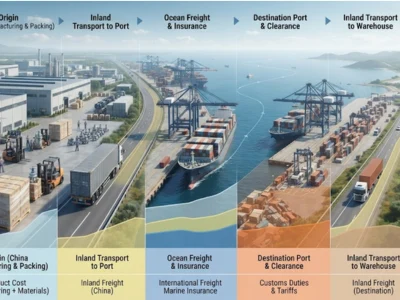
Total landed cost represents the complete financial impact of bringing an industrial product from a supplier's factory into productive use. It includes visible expenses such as manufacturing, freight, customs duties, and insurance, but it also incorporates operational costs created by supplier performance, quality management, contract execution, inventory planning, logistics coordination, and procurement risk.
Companies that consistently reduce procurement costs do not simply negotiate lower prices. They build sourcing strategies that prevent unnecessary costs before they occur. This requires selecting capable suppliers, defining technical requirements clearly, strengthening contracts, managing quality proactively, and continuously improving supplier performance throughout the sourcing lifecycle.
This guide explores how experienced procurement organizations reduce total landed cost while maintaining product quality, delivery reliability, and long-term supply chain resilience.

Why Procurement Leaders Focus on Total Landed Cost Instead of Purchase Price
One of the biggest differences between transactional purchasing and strategic procurement is how success is measured.
Transactional buyers often evaluate suppliers by comparing quotations. Strategic procurement teams evaluate suppliers by estimating the total business cost of working with each manufacturer over the life of the project.
These two approaches frequently lead to very different sourcing decisions.
Imagine that two manufacturers are bidding for the same OEM industrial component.
Supplier A offers a unit price that is 8% lower than Supplier B. From a commercial perspective, Supplier A appears to provide the better opportunity.
However, after production begins, several operational issues emerge. Delivery schedules become inconsistent because production planning lacks stability. Incoming inspections identify recurring dimensional deviations that require additional engineering reviews. Replacement parts must be shipped by air to avoid interrupting production, while procurement personnel spend increasing amounts of time coordinating corrective actions with the supplier.
Supplier B, despite quoting a slightly higher purchase price, delivers stable production quality, predictable lead times, complete technical documentation, and responsive engineering support. Over the course of the project, Supplier B generates significantly lower operational costs despite the higher quotation.
The procurement decision that initially appeared more expensive ultimately delivers the lower total landed cost.
This illustrates an important principle.
The objective of industrial procurement is not to purchase products at the lowest price. The objective is to acquire reliable products at the lowest sustainable total cost.
Organizations that adopt this mindset typically experience benefits that extend beyond procurement budgets. Production planning becomes more predictable, engineering resources spend less time resolving supplier issues, inventory levels become easier to optimize, and customer deliveries become more reliable.
Purchase Price Is Only One Layer of Procurement Cost
Purchase price is the most visible procurement cost because it appears directly on every supplier quotation. It is also the easiest number to compare during supplier selection.
Unfortunately, it is rarely the largest cost driver throughout the life of an industrial sourcing project.
Experienced procurement teams recognize that costs accumulate long after purchase orders have been issued. Every sourcing decision influences manufacturing stability, logistics performance, inventory utilization, engineering workload, quality assurance activities, and supplier management effort.
Instead of viewing procurement as a single commercial transaction, they evaluate it as a continuous operational process.
Understanding the Procurement Cost Hierarchy
A useful way to understand total landed cost is to view procurement costs as four interconnected layers rather than one isolated purchase price.
| Cost Layer | Typical Examples | Procurement Influence |
|---|---|---|
| Commercial Cost | Unit price, tooling, payment terms | Negotiation |
| Logistics Cost | Freight, customs duties, insurance, packaging | Transportation planning |
| Operational Cost | Incoming inspection, rework, inventory, engineering support, expedited shipments | Supplier performance |
| Strategic Cost | Supply continuity, customer satisfaction, production efficiency, long-term supplier development | Procurement strategy |
Many organizations invest substantial effort negotiating commercial costs while paying comparatively little attention to operational and strategic costs. Yet these higher-level costs often determine whether a sourcing project ultimately succeeds or fails.
The Hidden Costs That Buyers Usually Discover Too Late
Visible procurement costs are relatively straightforward to calculate because they appear on invoices, freight bills, or customs declarations.
Hidden costs are different.
They emerge gradually during production, logistics, quality management, and supplier collaboration. Because these expenses are distributed across multiple departments, they often remain invisible during supplier selection despite having a significant impact on profitability.
Common hidden cost drivers include:
| Hidden Cost Driver | Typical Business Impact |
|---|---|
| Supplier quality issues | Increased inspection, rework, customer complaints |
| Engineering clarification | Additional engineering hours and project delays |
| Production interruptions | Lost manufacturing capacity |
| Emergency logistics | Air freight replacing planned ocean shipments |
| Inventory imbalance | Higher warehouse and financing costs |
| Weak supplier communication | Slower problem resolution and longer lead times |
| Compliance issues | Customs delays, penalties, shipment holds |
| Poor production planning | Missed deliveries and schedule disruptions |
Each of these costs may appear relatively small in isolation. Combined over a twelve-month sourcing program, however, they frequently exceed the savings generated through purchase price negotiations.
For this reason, procurement leaders continuously ask a different question throughout supplier evaluation:
Which supplier is least likely to create additional operational costs after production begins?
That question often proves more valuable than asking which supplier offers the lowest quotation.
Why Procurement Problems Usually Start Before Production
Many buyers assume that procurement risks begin when manufacturing starts.
In reality, most hidden costs originate much earlier.
They begin during supplier selection, technical communication, contract preparation, and project planning.
When procurement teams rush these early activities, operational problems often become unavoidable later.
Incomplete Technical Requirements
Industrial products rarely fail because suppliers intentionally ignore specifications.
More often, suppliers receive incomplete information.
Critical tolerances may be missing from engineering drawings. Material specifications may contain conflicting revisions. Surface treatment requirements may not define inspection standards. Packaging expectations may never be discussed before production begins.
Under these circumstances, suppliers make assumptions.
Those assumptions frequently differ from the buyer's expectations.
The procurement reference emphasizes that clearly defining procurement requirements through complete technical documentation, quality agreements, and technical specifications is essential for reducing execution risk throughout the sourcing process. Clear technical requirements improve contract performance while minimizing engineering changes, procurement disputes, and unnecessary operational costs.
From a procurement perspective, every unanswered technical question represents a potential future cost.
Weak Contract Planning
Another common misconception is that contracts exist primarily to resolve disputes after problems occur.
Experienced procurement professionals view contracts differently.
A well-prepared contract prevents disputes from developing in the first place.
Clearly defining quality responsibilities, inspection methods, delivery requirements, acceptance procedures, documentation standards, and risk allocation reduces uncertainty throughout project execution.
Instead of asking whether a contract protects the company legally, procurement leaders ask a more practical question:
Does this contract clearly define how both parties will work together throughout production?
When responsibilities are clearly allocated before production begins, suppliers make better decisions, communication improves, and operational costs decrease significantly.
The procurement guidance emphasizes that effective contract management includes not only contract formation but also contract execution, supervision, acceptance, and ongoing performance management throughout the procurement lifecycle.
Supplier Capability Is More Important Than Supplier Presentation
Modern suppliers often provide professional websites, attractive quotations, and comprehensive company profiles.
None of these guarantee manufacturing capability.
Procurement teams that rely exclusively on commercial documents frequently discover capability gaps only after production has started.
Production capacity, process stability, quality management maturity, equipment maintenance, engineering competence, and continuous improvement culture cannot be evaluated from quotations alone.
These factors require systematic supplier assessment before sourcing decisions are finalized.
The companies that consistently achieve lower total landed cost understand that supplier evaluation is not about finding the cheapest manufacturer.
It is about identifying the manufacturer most capable of delivering stable quality, predictable delivery, efficient communication, and continuous operational improvement over the life of the sourcing relationship.
A Practical Framework for Reducing Total Landed Cost
Organizations that consistently reduce total landed cost rarely depend on a single initiative such as freight negotiation or supplier price reductions. Instead, they build procurement systems that identify unnecessary costs early, eliminate controllable risks, and continuously improve supplier performance.
One useful way to approach cost optimization is through a structured procurement framework that follows the entire sourcing lifecycle rather than focusing on isolated purchasing activities.
Step 1. Understand Where Costs Are Really Coming From
Before attempting to reduce costs, procurement teams should understand how costs are distributed across the sourcing process.
Many companies believe freight is their largest controllable expense because freight invoices are highly visible. However, after reviewing sourcing projects, procurement managers often discover that quality failures, production delays, engineering support, inventory carrying costs, and supplier management consume a much larger portion of procurement resources.
Instead of asking where the biggest invoices occur, procurement teams should identify where the biggest operational losses originate.
Questions worth asking include:
Which suppliers generate the highest corrective action workload?
Which products require repeated engineering clarification?
Which shipments most frequently require expedited transportation?
Which suppliers create the greatest delivery uncertainty?
Which projects consume excessive quality inspection resources?
Answering these questions provides a far more accurate picture of total landed cost than reviewing purchasing records alone.
Step 2. Identify the Cost Drivers That Can Actually Be Controlled
Not every procurement expense is controllable.
Raw material prices fluctuate with global markets, exchange rates change unexpectedly, and governments periodically revise tariffs and trade policies. While these external factors influence landed cost, procurement teams often have limited ability to change them.
Greater opportunities usually exist inside the sourcing process itself.
Examples include:
| Controllable Cost Driver | Typical Improvement Opportunity |
|---|---|
| Supplier selection | Choose manufacturers with stronger process capability |
| Product specifications | Reduce engineering clarification and production errors |
| Quality planning | Prevent defects instead of detecting them later |
| Contract management | Eliminate execution disputes |
| Packaging design | Improve container utilization |
| Production scheduling | Reduce partial shipments |
| Supplier communication | Accelerate issue resolution |
Organizations achieve better results when procurement resources focus on factors they can influence directly rather than attempting to optimize every cost simultaneously.
Step 3. Prioritize Improvements Based on Business Impact
One common mistake is attempting to improve every procurement process at the same time.
Experienced procurement organizations take a different approach.
They identify initiatives capable of delivering the greatest operational and financial impact before allocating resources.
For example, reducing incoming defect rates from 3% to 1% may generate larger savings than negotiating a 2% reduction in freight rates because quality improvements eliminate rework, replacement shipments, engineering support, production delays, and customer complaints simultaneously.
Likewise, improving supplier delivery performance by several percentage points may significantly reduce inventory requirements across multiple production lines.
Prioritization ensures procurement teams invest their time where improvements produce measurable business value.
Step 4. Build Continuous Improvement Into Supplier Management
Reducing total landed cost is not a one-time sourcing exercise.
Supplier performance evolves continuously.
Production volumes increase.
Manufacturing processes change.
Raw material availability fluctuates.
Customer demand shifts.
Without regular performance reviews, procurement teams often fail to recognize deteriorating supplier performance until operational problems become unavoidable.
Continuous supplier development therefore becomes one of the most effective long-term cost reduction strategies.
Rather than replacing suppliers whenever problems arise, leading procurement organizations collaborate with strategic manufacturers to improve production capability, quality systems, logistics planning, engineering support, and operational efficiency over time.
10 Practical Strategies Procurement Leaders Use to Reduce Total Landed Cost
1. Evaluate Suppliers Beyond Commercial Quotations
The quotation stage represents only a small portion of supplier evaluation.
Although pricing remains important, procurement decisions should also consider operational performance because supplier capability has a direct influence on future landed cost.
Before awarding business, procurement teams should assess:
Manufacturing capability
Production capacity
Quality management systems
Engineering support
Financial stability
Export experience
Continuous improvement capability
Communication responsiveness
A supplier with stronger operational capability often delivers greater long-term value despite a slightly higher quotation.
Supplier Evaluation Matrix
| Evaluation Area | Why It Matters |
|---|---|
| Manufacturing Capability | Determines production consistency |
| Quality Management | Reduces defects and rework |
| Engineering Capability | Resolves technical issues efficiently |
| Delivery Performance | Improves production planning |
| Capacity Planning | Supports future business growth |
| Export Experience | Reduces logistics and customs risks |
| Communication | Accelerates problem solving |
The objective is not simply to identify the least expensive supplier, but to identify the supplier most capable of supporting reliable long-term production.
2. Improve Technical Documentation Before Requesting Quotations
Many procurement issues originate long before production begins.
Incomplete technical documentation creates uncertainty for suppliers, increasing the likelihood of inconsistent quotations, production errors, engineering revisions, and quality disputes.
Before issuing RFQs, procurement and engineering teams should jointly verify that technical documentation includes:
Current engineering drawings
Material specifications
Performance requirements
Critical tolerances
Surface treatment requirements
Inspection standards
Packaging requirements
Required certifications
The procurement reference highlights that defining procurement requirements clearly through technical specifications and supporting documents significantly improves contract execution while reducing misunderstandings and procurement risk.
Well-prepared documentation improves quotation accuracy, reduces engineering clarification, and establishes a stronger foundation for supplier performance.
3. Prevent Quality Problems Instead of Inspecting Them Later
Incoming inspection is important, but it should not become the primary quality management strategy.
Inspection identifies defects after manufacturing has already consumed time, labor, materials, and logistics resources.
A more effective procurement approach emphasizes prevention.
Before production begins, buyers should ensure that quality expectations are documented through formal quality agreements that define measurable standards for both parties.
Effective quality agreements typically establish:
Product quality requirements
Sampling methods
Inspection frequency
Acceptance criteria
Corrective action procedures
Traceability requirements
Documentation responsibilities
For technically complex industrial products, technical agreements should complement quality agreements by defining manufacturing processes, validation methods, engineering requirements, and testing procedures.
Rather than viewing these documents as contractual formalities, procurement professionals should recognize them as practical tools for preventing hidden costs associated with defective products, replacement shipments, production interruptions, and customer complaints.
The procurement guidance emphasizes quality agreements, technical agreements, and acceptance standards as essential mechanisms for controlling procurement execution risk.

4. Optimize Logistics Without Sacrificing Supply Reliability
Transportation remains an important component of total landed cost, but reducing freight expenses should never compromise supply chain performance.
Instead of asking how to obtain the cheapest transportation, procurement teams should ask how to deliver products at the lowest total operational cost.
Best practices include:
Consolidating compatible purchase orders into full container loads.
Improving packaging efficiency to maximize container utilization.
Selecting transportation modes based on production requirements rather than habit.
Coordinating supplier production schedules to minimize partial shipments.
Reviewing Incoterms to ensure responsibilities align with procurement objectives.
Transportation optimization should always balance freight savings against inventory levels, customer delivery requirements, and production continuity.
A slower shipment may reduce transportation expenses while increasing inventory investment. Likewise, selecting a lower-cost carrier may introduce delivery variability that ultimately increases operational costs elsewhere.
5. Treat Compliance as a Procurement Strategy Rather Than an Administrative Task
Compliance is often considered the responsibility of customs brokers or logistics providers.
In reality, compliance begins during supplier selection.
Suppliers lacking export experience, incomplete documentation practices, or inadequate regulatory knowledge frequently create shipment delays, customs inspections, storage charges, and administrative costs that significantly increase total landed cost.
Before production begins, procurement teams should verify that suppliers understand documentation requirements, product classifications, applicable certifications, and destination-country import regulations.
The procurement reference also emphasizes procurement supervision, compliance management, supplier qualification, and process control as essential elements of procurement risk management rather than isolated legal functions.
Organizations that integrate compliance into supplier management reduce operational uncertainty while improving delivery performance across the entire supply chain.
6. Balance Order Quantities With Inventory Efficiency
One of the most common misconceptions in industrial procurement is that larger purchase orders always reduce costs. While increasing order quantities may lower unit prices and improve freight efficiency, excessive inventory often creates hidden expenses that gradually erode those savings.
Procurement leaders therefore evaluate order quantities from a total business perspective rather than a purchasing perspective.
Before increasing order volumes, buyers should consider several practical questions.
Will the additional inventory occupy valuable warehouse space?
Can production consume the materials before they become obsolete?
Will larger orders improve cash flow or restrict it?
Could changing customer demand increase inventory risk?
Is the supplier capable of delivering smaller scheduled releases instead?
These questions help procurement teams determine whether lower purchasing costs actually translate into lower total landed cost.
For many industrial products, flexible supply agreements provide a better solution than simply ordering larger quantities. Blanket purchase orders, scheduled deliveries, vendor-managed inventory, or safety stock agreements can maintain purchasing leverage while reducing inventory carrying costs and improving cash flow.
The objective is not to maximize order size but to optimize inventory across the entire supply chain.
7. Use Contracts to Prevent Costs Instead of Resolving Disputes
Contracts are often viewed as legal documents designed to protect buyers after problems occur.
Experienced procurement professionals see them differently.
A well-structured contract should prevent operational problems from occurring in the first place.
When expectations are clearly defined before production begins, suppliers make better decisions, communication becomes more efficient, and procurement teams spend less time resolving avoidable issues.
Instead of focusing exclusively on pricing terms, procurement contracts should clearly define operational responsibilities throughout the sourcing process.
Contract Elements That Directly Reduce Landed Cost
| Contract Element | Procurement Benefit | Hidden Cost Reduced |
|---|---|---|
| Technical Specifications | Eliminates engineering ambiguity | Design revisions, production errors |
| Quality Agreement | Defines measurable quality expectations | Rework, replacement shipments |
| Inspection Procedures | Standardizes acceptance methods | Inspection disputes |
| Delivery Requirements | Clarifies logistics responsibilities | Production delays |
| Risk Transfer | Allocates transportation responsibility | Freight claims and liability disputes |
| Warranty Provisions | Defines post-delivery obligations | Corrective action costs |
| Change Management | Controls engineering revisions | Scope creep and schedule disruption |
Rather than asking whether a contract is legally complete, procurement leaders ask a more practical question:
Does every operational responsibility have a clearly defined owner?
The procurement reference emphasizes that effective contract management includes contract preparation, execution, supervision, acceptance, and ongoing performance management. These activities reduce procurement uncertainty while improving execution efficiency throughout the sourcing lifecycle.
8. Verify Manufacturing Capability Before Awarding Business
A supplier quotation demonstrates commercial competitiveness.
It does not demonstrate manufacturing capability.
This distinction explains why supplier verification is one of the highest-return investments available to procurement teams.
Before awarding long-term sourcing projects, experienced buyers seek evidence that suppliers can consistently manufacture products to specification under real production conditions.
Supplier verification typically evaluates:
Production capability
Process stability
Equipment condition
Quality management systems
Engineering resources
Production capacity
Workforce competency
Material traceability
Continuous improvement practices
Regulatory compliance
Unlike commercial negotiations, these evaluations provide direct insight into the operational risks that influence future landed cost.
Why Factory Audits Generate Long-Term Savings
Factory audits are sometimes viewed as an additional procurement expense.
In reality, they frequently eliminate much larger costs that would otherwise occur during production.
For example, a factory audit may reveal:
| Audit Observation | Possible Business Consequence |
|---|---|
| Weak incoming material control | Higher defect rates |
| Poor preventive maintenance | Equipment breakdowns and delayed production |
| Inconsistent process control | Product variation and rework |
| Limited production capacity | Missed delivery schedules |
| Inadequate traceability | Expensive product investigations |
| Weak corrective action process | Recurring quality issues |
Identifying these weaknesses before production begins allows procurement teams to work with suppliers on corrective actions or select alternative manufacturers before significant investments have been made.
This preventive approach aligns closely with the procurement reference, which emphasizes supplier qualification, procurement supervision, and proactive risk management throughout the sourcing process rather than responding only after problems occur.
For companies sourcing industrial products from China, supplier verification and factory audits provide valuable transparency into actual manufacturing capability and significantly reduce sourcing uncertainty.
9. Measure Supplier Performance Continuously
Supplier evaluation should never end with supplier approval.
Manufacturing performance changes over time as production volumes increase, equipment ages, workforce experience changes, and market conditions evolve.
Without regular performance reviews, procurement teams often fail to recognize deteriorating supplier performance until quality issues or delivery delays begin affecting operations.
A practical supplier performance review should combine commercial indicators with operational metrics.
Recommended Supplier Performance Dashboard
| Performance Area | KPI | Why It Matters |
|---|---|---|
| Product Quality | Incoming defect rate | Measures manufacturing consistency |
| Delivery Reliability | On-time delivery | Supports production planning |
| Lead Time Stability | Lead time variation | Improves inventory planning |
| Engineering Support | Response time to technical issues | Accelerates problem resolution |
| Cost Performance | Total landed cost trend | Measures long-term procurement efficiency |
| Compliance | Audit findings and certification status | Reduces regulatory risk |
| Continuous Improvement | Supplier improvement initiatives | Strengthens long-term competitiveness |
Reviewing these indicators with strategic suppliers encourages continuous improvement rather than reactive problem-solving.
High-performing procurement organizations view supplier relationships as long-term partnerships that evolve through collaboration, transparency, and shared performance objectives.
10. Improve Visibility Across the Entire Procurement Process
Many procurement problems are not caused by poor decisions but by delayed information.
A supplier experiences production delays.
Engineering changes are issued after manufacturing begins.
A shipment misses its scheduled vessel.
Customs documentation requires correction.
By the time procurement teams become aware of these issues, available response options are often expensive and disruptive.
Improving visibility across the sourcing process enables buyers to identify problems while corrective action is still practical.
Rather than relying solely on shipment tracking, procurement visibility should extend across the entire procurement lifecycle, including supplier production progress, engineering revisions, inspection status, logistics milestones, customs clearance, and inventory availability.
Organizations with stronger visibility can:
Detect supply risks earlier.
Coordinate production schedules more effectively.
Reduce emergency transportation.
Improve inventory planning.
Respond to supplier issues before customer deliveries are affected.
Greater visibility also improves cost analysis because procurement teams can connect operational events directly to financial outcomes.
Instead of simply recording higher logistics expenses, they understand why those expenses occurred and which upstream procurement decisions created them.
The procurement reference similarly recommends identifying risks early, evaluating their potential impact, implementing mitigation measures, and continuously monitoring procurement activities throughout execution to minimize operational disruption.
Which Cost Reduction Opportunities Should Procurement Teams Prioritize?
Not every improvement initiative delivers the same return.
Procurement managers should prioritize projects that simultaneously reduce operational risk and improve financial performance.

Procurement Cost Reduction Priority Matrix
| Initiative | Expected Savings | Implementation Effort | Recommended Priority |
|---|---|---|---|
| Supplier Verification | Very High | Medium | Highest |
| Technical Documentation Improvement | Very High | Low | Highest |
| Quality Agreements | Very High | Medium | Highest |
| Factory Audits | High | Medium | High |
| Contract Standardization | High | Medium | High |
| Logistics Optimization | Medium | Medium | Medium |
| Inventory Optimization | Medium | Medium | Medium |
| Freight Rate Negotiation | Medium | Low | Medium |
| Supplier KPI Reviews | Medium | Low | Medium |
| Procurement Automation | Long-term | High | Strategic |
Notice that freight negotiation appears relatively low on the priority list.
While transportation costs remain important, procurement teams often achieve much greater long-term savings by improving supplier capability, technical communication, contract execution, and quality management.
Procurement Checklist Before Awarding a New Supplier
Before approving any new sourcing project, procurement teams should confirm that the following questions have been addressed.
| Procurement Area | Review Question |
|---|---|
| Supplier Selection | Has the supplier been evaluated beyond commercial pricing? |
| Factory Capability | Has manufacturing capability been verified? |
| Technical Documentation | Are specifications and drawings complete? |
| Quality Planning | Are quality requirements clearly documented? |
| Contract Management | Are responsibilities and delivery terms fully defined? |
| Compliance | Are regulatory requirements understood by both parties? |
| Logistics Planning | Has transportation been optimized for both cost and reliability? |
| Inventory Planning | Does the order quantity balance purchasing savings with inventory costs? |
| Risk Management | Have major procurement risks been identified and mitigation plans established? |
| Performance Monitoring | Is there a structured supplier review process after production begins? |
Using this checklist before awarding business encourages procurement teams to evaluate sourcing decisions from a long-term operational perspective rather than focusing solely on initial purchase price.
Common Procurement Decisions That Quietly Increase Total Landed Cost
Many procurement teams spend considerable effort negotiating better prices, yet the greatest cost increases often result from decisions made long before products are shipped. These decisions rarely appear on a purchase order or freight invoice, making them difficult to identify until operational problems begin affecting production.
Understanding these common mistakes helps buyers eliminate unnecessary costs at their source instead of paying for corrective actions later.
Selecting the Lowest Bid Without Understanding Operational Risk
Competitive pricing is an important part of supplier selection, but it should never become the only decision criterion.
When procurement focuses exclusively on commercial negotiations, important operational factors are often overlooked. A supplier may offer an attractive quotation while lacking stable production planning, mature quality systems, sufficient engineering resources, or the capacity to support future demand.
The financial consequences rarely appear immediately. Instead, they emerge gradually through increased inspection activity, repeated engineering support, delivery delays, emergency logistics, and recurring supplier management efforts.
Before awarding business, procurement teams should evaluate whether the supplier can consistently meet production requirements-not simply whether it can provide the lowest quotation.
Treating Supplier Qualification as a One-Time Activity
Supplier qualification is often completed during onboarding and then largely forgotten.
In reality, supplier capability changes over time. Production volumes increase, key personnel change, equipment ages, and manufacturing priorities evolve. A supplier that performed well two years ago may no longer represent the best long-term sourcing option.
Rather than viewing qualification as a single approval process, procurement leaders treat it as an ongoing evaluation supported by periodic factory audits, performance reviews, and continuous communication.
Maintaining visibility into supplier capability allows buyers to identify emerging risks before they affect production schedules or customer deliveries.
Allowing Procurement and Engineering to Work Independently
Many hidden procurement costs originate from poor internal communication rather than supplier performance.
For example, engineering may revise a product drawing after a purchase order has already been issued. If procurement does not immediately communicate the updated revision, the supplier may continue manufacturing according to obsolete specifications. Although production has technically followed the approved documentation, the finished products may no longer satisfy current engineering requirements.
The result is rarely limited to rejected components. Production schedules are disrupted, replacement manufacturing becomes necessary, logistics plans change, and engineering resources are diverted to resolving an issue that could have been prevented through better internal coordination.
Successful sourcing projects require procurement, engineering, quality, logistics, and production teams to operate as an integrated decision-making group rather than as independent departments.
Waiting Until Problems Occur Before Managing Suppliers
Some organizations engage suppliers only when quality issues or delivery delays occur.
This reactive approach almost always increases total landed cost because corrective actions are more expensive than preventive actions.
Regular supplier performance reviews, production progress meetings, and quality discussions create opportunities to identify potential issues while they remain manageable. Even simple conversations about capacity planning, material availability, or engineering changes can prevent delays that would otherwise require costly recovery measures.
Procurement should therefore be viewed as continuous supplier management rather than periodic order placement.
A Real Procurement Scenario
Consider an OEM manufacturer sourcing precision-machined aluminum housings for a new automation project.
After reviewing several quotations, the procurement team selected the supplier offering the lowest unit price. Commercially, the decision appeared well justified because the quotation reduced projected purchasing costs by nearly 9% compared with the second-ranked supplier.
Production began on schedule, but problems emerged during the first delivery cycle.
Incoming inspection identified dimensional variation outside the specified tolerance range, requiring additional measurement, engineering review, and supplier communication. While corrective actions were being implemented, the next shipment was delayed because production had been temporarily suspended to investigate the issue.
To avoid disrupting final assembly, the buyer authorized emergency air freight for replacement components. Engineering teams spent additional time updating technical documentation, while procurement coordinated supplier meetings, quality improvement plans, and revised delivery schedules.
Several months later, management reviewed the project.
Although purchase price savings had been achieved exactly as planned, overall procurement costs had increased because quality failures, engineering support, expedited transportation, and production disruption outweighed the original commercial savings.
The review produced an important conclusion.
The procurement process had optimized price, but it had not optimized total landed cost.
For future sourcing projects, the company introduced additional supplier verification, more detailed technical documentation, structured quality agreements, and formal factory capability assessments before awarding business.
The initial quotation was no longer the only factor influencing supplier selection. Operational performance became equally important.

Turning Procurement Into a Competitive Advantage
Reducing total landed cost should not be viewed as a cost-cutting exercise. The organizations that achieve the greatest long-term savings are usually those that improve procurement capability rather than simply reducing procurement expenditure.
This requires procurement teams to shift their attention from individual transactions to the broader sourcing lifecycle.
Successful organizations consistently:
Evaluate suppliers based on long-term operational value rather than purchase price alone.
Invest time in developing complete technical documentation before requesting quotations.
Establish quality expectations before production begins instead of relying on inspection after delivery.
Use contracts to define responsibilities clearly and prevent execution problems.
Monitor supplier performance continuously and address issues before they affect production.
Encourage collaboration between procurement, engineering, quality, logistics, and operations throughout the sourcing process.
Each of these practices contributes to lower hidden costs, stronger supplier relationships, and a more resilient supply chain.
How Strategic Sourcing Supports Lower Total Landed Cost
Many of the opportunities discussed throughout this guide occur before production starts.
Identifying capable manufacturers, verifying production capability, reviewing technical documentation, evaluating quality systems, and assessing delivery performance all influence future procurement costs long before products leave the factory.
For companies sourcing industrial products from China, these activities become particularly important because supplier capability, export experience, production management, and communication standards can vary significantly across manufacturers.
Working with an experienced sourcing partner helps buyers evaluate these factors objectively before making long-term procurement commitments.
At Sijitonghui, we support industrial buyers throughout the sourcing lifecycle by helping them identify qualified manufacturers, conduct supplier verification and factory audits, coordinate quality assurance activities, and manage logistics more effectively. Rather than focusing solely on obtaining lower quotations, our objective is to help customers build procurement strategies that reduce operational risk, improve supply reliability, and achieve lower total landed costs over time.
Conclusion
Reducing total landed cost requires procurement teams to look beyond purchase price and consider the complete financial impact of every sourcing decision.
The most significant savings are often achieved not through aggressive price negotiations but through better supplier selection, clearer technical documentation, stronger contract management, proactive quality planning, effective logistics coordination, and continuous supplier performance improvement.
When procurement decisions are evaluated from this broader perspective, organizations gain more than cost savings. They improve production stability, strengthen supplier relationships, reduce operational risk, and build supply chains that remain competitive over the long term.
Ultimately, successful industrial procurement is not about finding the cheapest supplier. It is about consistently making sourcing decisions that create the greatest long-term business value.